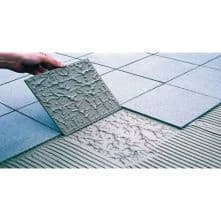
Adhesives for use with ceramic tiles and mosaics play an important role in modern construction works due to their high strength and durability that provide good results in terms of providing stability and bonding. The use of BIS certified tile adhesives is very important because these materials guarantee high efficiency, durability and safe use in residential and commercial construction projects. Due to the fact that tile adhesives are crucial components of high-quality construction, producers of these products must meet IS 15477:2019 standards established by BIS.
There are a number of important technical properties that should be considered in terms of ceramic tile and mosaic adhesives according to IS 15477:2019 standard. They include such characteristics as strength, tensile adhesion, shear resistance, open time, adjustability, workability, storage stability and performance in certain environmental conditions. The BIS Quality Control Order (QCO) and ISI Mark are essential signs indicating the compliance of tile adhesives with Indian Standard requirements.
What is IS 15477:2019 for Ceramic Tile Adhesives?
IS 15477:2019 is the Indian Standard that specifies requirements for adhesives used for fixing ceramic tiles and mosaics in construction applications. The standard ensures that tile adhesives provide strong bonding, long-term durability, and resistance to environmental and service conditions in building structures. As per BIS requirements, ceramic tile adhesives are:
- Tested for tensile adhesion strength
- Examined for slip resistance and open time
- Checked for water retention and workability
- Verified for durability and bonding performance
BIS Approved QCO Standards for Ceramic Tile Adhesives in India
As per the Government of India’s Quality Control Order (QCO), all manufacturers, suppliers and importers must meet the standards established by IS 15477:2019 for adhesives for ceramic tiles and mosaic. Only products that are BIS certified and meet certain safety, strength and quality criteria will be permitted for use in India under this law.
- BIS certification is required for manufacturing and marketing tile adhesives in India
- Must meet IS 15477:2019 standards in all respects
- BIS license needed to use the ISI Mark
- Unlicensed adhesive products cannot be legally sold in India
- Aids in complying with Indian safety, strength and durability standards
- Aids in increasing product reliability for construction projects
- Opportunity to participate in government and infrastructure projects
- Penalties may include confiscation of non-conforming products
Who Requires BIS Certification for Tile Adhesives under IS 15477:2019?
BIS certification under IS 15477:2019 is mandatory for organizations involved in manufacturing, importing, or supplying ceramic tile adhesives and mosaic adhesives in the Indian construction market.
Applicable to:
- Manufacturers (India) - Must obtain BIS certification if the product falls under applicable Quality Control Orders.
- Foreign Manufacturers - Require BIS approval to export ceramic tile adhesives and mosaics to India.
- Importers/Brand Owners - Must ensure adhesives meet BIS certification requirements before sale.
- Dealers and Distributors - Should sell only BIS-certified tile adhesive products where mandatory.
Why BIS ISI Mark Certification is Beneficial for Tile Adhesives Manufacturers?
BIS ISI Mark Certification for Ceramic Tile and Mosaics Adhesives based on IS 15477:2019 offers great regulatory approval and market recognition for manufacturers. It means that the product satisfies the Indian Standard requirements concerning bonding strength, durability, workability, and construction performance in the long term.
- Helps comply with IS 15477:2019 BIS standards for tile adhesives
- Permits use of the ISI Mark label on the packaging and advertisement
- Increases adhesive bonding strength and durable performance
- Increases resistance to water, heat, and other environmental factors
- Makes products more accepted in government and infrastructure construction projects
- Provides market credibility and trust from the side of contractors and builders
- Prevents possible problems with tile delamination, cracking, or improper installation
- Provides standard production process and product quality
- Increases eligibility to participate in major construction projects and tenders
BIS ISI Laboratory Testing Process for Tile Adhesive Products under IS 15477
For Ceramic Tile and Mosaics Adhesives to consistently perform, the Bureau of Indian Standards (BIS) has set down the minimum performance specifications that are certified under IS 15477:2019. It is through this process that the manufacturers are able to provide a product that meets uniform performance standards pertaining to strength, durability, and workability among other aspects. The Bureau of Indian Standards (BIS) tests and performance specifications for Ceramic Tile and Mosaics Adhesives according to IS 15477:2019 include the following:
| Test Group | What is Tested | Purpose |
| Adhesive Classification Tests | Type 1 and Type 2 adhesive classification based on porosity, polymer modification level, and resin composition | Ensures correct selection of adhesive type based on tile porosity and application requirements as per IS 15477:2004 |
| Mixing & Workability Tests | Mixing process, consistency, rheology, pot life, slump resistance, and application behavior | Ensures proper workability, uniform mixing, and ease of application during tile fixing operations |
| Storage Stability Tests | Shelf life, storage temperature range (5°C to 30°C), and long-term stability performance | Ensures adhesive maintains quality and performance during storage without degradation |
| Tensile Adhesion Strength Tests | Bond strength between tile and substrate under dry and wet conditions | Ensures strong adhesion and long-term bonding performance of ceramic tiles and mosaics |
| Shear Adhesion Strength Tests | Shear resistance under dry, wet, and heat ageing conditions | Ensures resistance against sliding, structural load, and environmental stress |
| Open Time Tests | Time period during which adhesive remains workable after application | Ensures sufficient installation time for proper tile placement before adhesive setting begins |
| Adjustability Tests | Tile repositioning ability after initial placement before final setting | Ensures proper alignment and correction of tiles during installation without loss of bonding strength |
| Environmental Conditioning Tests | Performance under humidity, water immersion, and temperature-controlled conditions | Ensures adhesive reliability under real environmental and climatic conditions |
| Heat Ageing Performance Tests | Adhesive behavior after exposure to elevated temperature conditions | Ensures durability and stability of adhesive under thermal stress conditions |
| Bond Integrity & Failure Resistance Tests | Breaking force, adhesion failure limit, and structural bonding integrity | Ensures long-term structural safety and prevents tile detachment or bonding failure |
How to get BIS ISI Mark for Ceramic Tile Adhesives in India?

The BIS certification process ensures that ceramic tile adhesives comply with IS 15477:2019 requirements for quality, safety, and performance. The certification is issued by the Bureau of Indian Standards (BIS) after evaluation of testing, documentation and factory compliance.
- Online Registration :-Manufacturers register on the BIS Manak portal by submitting company, factory, and product details. Foreign manufacturers must appoint an Authorized Indian Representative (AIR).
- Testing at BIS-Approved Laboratory :- Product samples are tested in BIS-recognized laboratories to verify compliance with adhesion strength, slip resistance and durability requirements under IS 15477:2019.
- Application Submission :-The application is submitted along with test reports, technical documents, and factory details. Foreign manufacturers must also submit AIR-related documents.
- Factory Inspection :- BIS officials inspect manufacturing facilities to verify quality control systems, production processes and testing capabilities.
- Grant of BIS License :- If all the above requirements are satisfactorily met, BIS grants the certification license under Scheme-I.
- Use of ISI Mark :- After approval, manufacturers can use the ISI Mark along with CM/L number on tile adhesive packaging and product labels.
Document Checklist for BIS Registration of Tile Adhesives
| Document Category | Documents Required |
| Basic Details | GST Certificate, Email ID & Contact Number, Factory & Office Address, Rent Agreement / Lease Deed (if applicable), Partnership Deed (if applicable for partnership firms) |
| Manufacturing Details | List of Machinery, Process Flow Chart, Factory Layout Plan |
| Raw Material Details | List of Raw Materials, Supplier Details, Raw Material Invoices, Raw Material Test Certificates |
| Testing & Quality Control | List of Testing Equipment, Calibration Certificates, QC/Lab In-charge Appointment Letter & Qualification |
| Production Details | Annual Installed Capacity, Last Year Production Value |
| Product & Packaging Details | Quantity per Package, Nature of Packing, Product Printing / Marking Details |
| Management Details | Top Management Details, BIS Communication Contact Person |
| Brand & Certification Documents | Trademark / Brand Certificate, Consent Letter from BIS Recognized Laboratory |
| Additional Documents | Weekly Off Details, Hygiene Document (if applicable), Relaxation Letter (if applicable), Any Other Relevant Document |
| Foreign Manufacturer Requirements | Agreement with AIR (Authorized Indian Representative), [AIR ID Document Omitted], AIR Nomination Form, Required Undertakings, Scope of License |
Foreign manufacturers must appoint an Authorized Indian Representative (AIR) to manage BIS compliance and communication in India.
How to use BIS ISI Mark on Tile Adhesive Packaging as per IS 15477?
After the BIS approval, the ISI Mark for Adhesives for Use with Ceramic Tiles and Mosaics (IS 15477:2004) should be properly affixed to the packaging material or packing of the product. The ISI Mark, along with other essential information like the name or trademark of the manufacturer, the license number (CM/L) issued by BIS, and other relevant information, should be affixed to the package. This ISI Mark signifies that the product meets all the quality standards as per the Indian Standard guidelines:
| Requirement | Details |
| ISI Mark | Indicates that the product is BIS certified and conforms to standards |
| Standard Number | IS 15477:2019 |
| CML Number | Certification Marks Licence (CML) number issued by BIS |
| Manufacturer Details | Name of manufacturer or registered trademark |
| Batch / Date | Batch number, heat number, or manufacturing date for traceability |
Note: Marking is typically applied using durable stamping, tagging, or permanent printing to ensure clear identification during handling, storage, and transportation, as per BIS marking requirements.
BIS License Validity and Renewal for Ceramic Tiles and Mosaics Adhesives
| Particulars | Details |
| Validity | Typically 1 to 2 years, depending on BIS approval conditions |
| Renewal | Must be renewed before expiry by submitting the application along with the prescribed fee and updated documents |
| Surveillance | Includes periodic factory inspections and market sample testing conducted by BIS |
| Compliance | Continuous following to standard and applicable Quality Control Orders (QCOs) is mandatory |
| Risk | Non-compliance or failed sample testing may lead to suspension or cancellation of the BIS license |
BIS Certification Cost for Ceramic Tile Adhesives under IS 15477:2019
The BIS Certification cost for tile adhesives includes application fees, inspection charges, testing costs, license fees and marking fees as per BIS Scheme-I guidelines.
| Charge Type | Indian Manufacturers | Foreign Manufacturers |
| Application Fee | INR 1,000 | USD 15 |
| Audit Charges | INR 7,000 | USD 3,200 - 5,900 |
| License Fee | INR 1,000 | USD 15 |
| Marking Fee | As applicable | As applicable |
| Testing Charges | As applicable | As applicable |
| EVTL India Consultancy Fee | As per actual | As per actual |
Note:
- Application fee for foreign manufacturers is payable via SWIFT (SAARC countries may pay in INR with applicable GST).
- Audit charges for foreign manufacturers vary based on country/location.
- The marking fee is determined based on the product category and production volume (MSME benefits may apply).
- Testing charges are paid directly to BIS-recognised laboratories.
- Consultancy fees vary depending on product type and factory location.
Business Risks of Non-Compliance with BIS IS 15477:2019
Failure to adhere to the BIS Certification regulations for Adhesives for Use with Ceramic Tiles and Mosaics (IS 15477:2019) could have severe implications in terms of regulatory and business consequences. Non-adherence to the regulations would lead to legal actions, restriction in the sale of the products, product recall, and loss in reputation. Compliance with these regulations would ensure that the business activities are not interrupted by legal or financial consequences.
- Sales Ban: Restrictions in production, sale, distribution, importation, or storage of non-certified adhesives.
- Financial Fines: Implementation of penalties, monetary sanctions, and prosecution of the violation as per the provisions of the BIS Act 2016.
- Product Recall: Recalling of the non-complying products from the market.
- Suspension in License: Suspension, cancellation, or revocation of the license to carry out BIS Certification.
- Damage to Reputation: Loss of consumer confidence and negative impact on business.
Conclusion
BIS Certification for Adhesive Used With Ceramic Tiles and Mosaic has become inevitable in today’s construction activities so that the bond remains strong and durable for a long period. The basic objective behind the use of BIS Certified Tile Adhesive is to provide reliable adhesion, moisture resistant properties, workability, and safety aspects. The adherence to the provisions specified in IS 15477:2019 will make sure that manufacturers comply with the most stringent standards relating to adhesive qualities.
BIS License for Tile Adhesive makes it possible to ensure compliance with the standard set by Indian Standards which facilitates ISI Marking. This will indicate the reliable nature of such products. It will enhance the credibility and acceptability of adhesive products. If you need any assistance from a professional BIS Consultant for Tile Adhesives in getting certification under IS 15477:2019, then EVTL India can prove to be a very good choice for manufacturers.