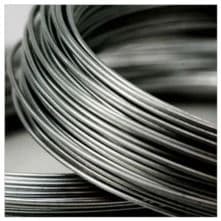
The steel wire for the manufacture of mechanical springs, particularly oil-hardened and
tempered steel wire, aims at providing maximum strength and toughness along with high
durability against repeated mechanical stress. Such steel wires are commonly used in
automotive assemblies, industrial machinery, engineering machines, and other applications
requiring springs for effective performance under mechanical stress.
These tempered steel wires are governed under IS 4454 (Part 2): 2025, issued by the Bureau of
Indian Standards. There are certain requirements specified under this standard in relation to
chemical composition, mechanical properties, heat treatments, dimensional specifications, and
surface finish. The test methods include tensile tests, hardness, and performance
characteristics of the material. This product certification aims to provide standardized and
consistent steel wire products for use as mechanical springs.
what is is 4454 (Part 2):2025?
This is the Indian Standard for oil-hardened and tempered steel wire used for mechanical
springs, which defines requirements for chemical composition and quality of steel wire intended
for high-performance spring applications. This standard is set by the BIS (Bureau of Indian
Standards) to ensure that product quality and safety are met, and the wires are
- Manufactured using oil hardening and tempering processes to achieve the desired
strength
- Designed to withstand repeated stress in mechanical spring applications
- Tested for tensile strength and surface defects
- Produced with specified dimensional tolerances
Who can apply for oil hardened steel wire bis approval ?
BIS authorisation under IS 4454 (Part 2): 2025 is required for businesses involved in
manufacturing, importing, or supplying spring steel wire in India.
Applicable to:
- Manufacturers (India): Must get BIS authorisation if the tempered steel wire is covered
under QCO.
- Foreign Manufacturers - Need certification to export the oil-hardened wire to India.
- Importers/Brand Owners - Must ensure that the products are BIS certified before
selling.
- Sellers/Distributors - Should only sell certified tempered steel wire.
Testing and Inspection Requirements
To ensure the quality, safety needs, and adequate performance of steel wire used in mechanical
springs, the standard set by the Bureau of Indian Standards (BIS) defines proper testing and
inspection requirements during manufacturing.
Manufacturing & Standards Compliance Tests
- Standard Compliance Verification (R) - Ensures product conforms to IS 4454 (Part 2)
requirements
- Manufacturing Process Control (R) - Confirms oil hardening and tempering processes
are properly implemented
- Specification Compliance Review (R) - Ensures adherence to grade, size, and
performance requirements
- Production Control Unit Verification (R) - Ensures batches are defined based on heat,
size, and uniform production conditions
- Quality Assurance Plan (QAP) Implementation (R) - Verifies that defined
inspection/testing levels are followed
Chemical & Material Verification Tests
- Ladle Analysis Test (R) - Confirms chemical composition at steel making stage (for
primary producers)
- Product Analysis Test (R/S) - Verifies final chemical composition of finished wire
- Alloy Composition Verification (R) - Ensures required elements like C, Si, Mn, Cr, V,
etc. meet limits
- Impurity Control Test (R) - Ensures Sulphur (S) and Phosphorus (P) are within
permissible limits
- Grade Identification Verification (R) - Confirms correct classification (FDC, TDC, VDC,
etc.)
Mechanical Testing Requirements
- Tensile Strength Test (R) - Determines tensile strength and reduction of area
- Wrapping Test (R) - Checks ductility and surface integrity under winding conditions
- Torsion Test (R) - Evaluates resistance to twisting stresses
- Bend Test (R) - Verifies flexibility and crack resistance
- Coiling & Stretching Test (R) - Assesses behavior under spring-forming conditions
- Deep Etch Test (R) - Detects internal defects and segregation
- Decarburization Test (R) - Measures surface carbon loss
- Eddy Current Test (S) - Detects surface and internal flaws (if facility available)
Dimensional & Physical Property Tests
- Dimension Verification Test (R) - Ensures compliance with specified diameter and
shape
- Tolerance Compliance Check (R) - Verifies permissible dimensional deviations
- Surface Finish Inspection (R) - Ensures wire is free from defects and irregularities
- Freedom from Defects Check (R) - Confirms absence of cracks, seams, and inclusions
Sampling & Batch Control Tests
- Sample Selection Verification (R) - Ensures correct sampling as per Annex-A grouping
guidelines
- Grouping Compliance Check (R) - Verifies grouping based on chemical composition
and grade
- Batch/Heat Traceability (R) - Ensures linkage of samples to heat number/control unit
- Sampling Frequency Compliance (R) - Ensures testing frequency as per BIS Table-1
- Random Sampling Compliance (R) - Ensures statistical sampling methods are
followed
Steps for Oil Hardened Steel Wire BIS License

The BIS Authorisation process ensures that the mechanical spring steel wire meets the required
standards for proper and efficient operation. This process is set by the Bureau of Indian
Standards (BIS) and includes the following steps:
- Online Registration: Manufacturers register on the BIS Manak portal by submitting company, factory, and product details. Foreign manufacturers must appoint an Authorized Indian Representative (AIR).
- Testing at BIS-Approved Laboratory: Product samples are evaluated in BIS-recognized laboratories to check compliance with prescribed installation and performance requirements, including joint integrity and physical properties.
- Application Submission: The application is submitted along with test reports, technical documents, and factory details. In the case of foreign manufacturers, they must also submit AIR-related documents.
- Factory Inspection :BIS authorities conduct on-site inspections of the manufacturing units to verify the production process, safety measures, and quality control system.
- Grant of BIS License: Once all requirements are satisfactorily met, BIS grants the certification license under Scheme-I.
- Use of ISI Mark: Once the license is granted, the manufacturer can use the ISI mark on the product with a CM/L number, confirming that the product meets BIS standards.
Required Documents for IS 4454 (Part 2): 202 Approval
Foreign manufacturers must additionally appoint an Authorized Indian Representative (AIR) to coordinate with the Bureau of Indian Standards (BIS) and manage compliance requirements in India.
Marking Requirements & License Validity
Marking Requirements
When a manufacturer obtains BIS Approval, the ISI Mark for Plastic Water Supply Pipes must be clearly and permanently marked on its packaging or on the product. In addition to the ISI Mark, essential details such as the licence number (CM/L), manufacturer’s identification, etc. This ensures the product meets all quality and safety standards. More details are mentioned below:
| Requirement | Details |
|---|
| ISI Mark | Indicates that the product is BIS certified and conforms to standards |
| Standard Number | IS 4454 (Part 2): 2025 |
| CML Number | Certification Marks License (CML) number issued by BIS |
| Manufacturer Details | Name of manufacturer or registered trademark |
| Batch / Date | Batch number, heat number, or manufacturing date for traceability |
Note: Marking is typically applied using durable stamping, tagging, or permanent printing to ensure clear identification during handling, storage, and transportation, as per BIS marking requirements.
Tempered steel wire BIS Licence Rules
| particulars | Details |
|---|
| Initial Validity | Typically 1 to 2 years, depending on BIS approval conditions |
| Renewal | Must be renewed before expiry by submitting the application along with the prescribed fee and updated documents |
| Surveillane | Includes periodic factory inspections and market sample testing conducted by BIS |
| Compliance | Continuous following to standard and applicable Quality Control Orders (QCOs) is mandatory |
| Risk | Non-compliance or failed sample testing may lead to suspension or cancellation of the BIS license |
Fees for oil hardened steel wire license
The cost of BIS Approval for Polyethylene Pipe includes charges for application, inspection, license, testing, and marking. These fees are paid to BIS as per Scheme I guidelines.
| Charge Type | Indian Manufacturers | Foreign Manufacturers |
|---|
| Application Fee | INR 1,000 | USD 15 |
| Audit Charges | INR 7,000 | USD 3,200 – 5,900 |
| License Fee | INR 1,000 | USD 15 |
| Marking Fee | As applicable | As applicable |
| Testing Charges | As applicable | As applicable |
| EVTL India Consultancy Fee | As per actual | As per actual |
Note:
- Application fee for foreign manufacturers is payable via SWIFT (SAARC countries may pay in INR with applicable GST).
- Audit charges for foreign manufacturers vary based on country/location.
- Marking fee depends on the product category and production volume (MSME benefits may apply).
- Testing charges are paid directly to BIS-approved laboratories.
- Consultancy fees depend on product type and factory location.
Conclusion
The Bureau of Indian Standards has set the required specification for manufacturing and selling
Steel Wire for Mechanical Springs, specifically Oil Hardened and Tempered Steel Wire under IS
4454 (Part 2). The certificate assures that the products meet the necessary quality
specifications to produce steel wires with heat treatment, high strength, and excellent fatigue
resistance required for spring applications. This will help ensure consistency in performance
from batch to batch in terms of usage.
Apart from ensuring compliance with mandatory regulations in India, the BIS Certification
enhances brand credibility and strengthens customer trust in the product. Assistance provided
by EVTL India can help the manufacturer comply with the necessary standards through
documentation, application filing and testing process.