
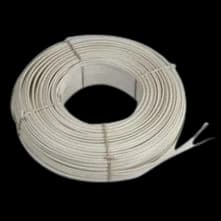
Shot firing cables are specialized cables designed for safe and efficient use in initiating explosive charges in mining, construction, and other industrial blasting operations (excluding use in shafts). These cables feature robust construction with durable insulation to ensure reliable performance under harsh conditions.
They are engineered for flexibility, high conductivity, and resistance to environmental stress, reducing the risk of accidental discharges or damage during operations. Their design ensures enhanced safety and accuracy, making them indispensable in controlled blasting applications.
The Cables (Quality Control) Order, 2020, issued by the Ministry of Commerce and Industry, mandates that shot firing cables conform to the Indian Standard IS 5950:1984 and bear the BIS ISI Mark for legal sale in the Indian market. BIS certification ensures these cables meet stringent quality, performance, and safety benchmarks critical for their intended applications. The certification process involves rigorous testing and inspection to verify compliance with the prescribed standards. Non-compliance with BIS requirements can result in penalties, emphasizing the importance of certification for manufacturers seeking to market their products in India.
BIS certification is crucial for shot firing cables to ensure their safety, reliability, and compliance with regulatory standards. Mandated by the Cables (Quality Control) Order, 2020, it requires manufacturers to conform to IS 5950:1984. Certification verifies that the cables are resistant to environmental stresses and provide consistent performance, minimizing risks in explosive operations. By meeting these standards, manufacturers protect users and reduce potential hazards. Certification also enhances customer confidence and market access. Without BIS certification, manufacturers are prohibited from selling their products in India, facing legal penalties for non-compliance.
IS 5950:1984 specifies the requirements for shot firing cables used in applications other than in shafts. The standard outlines specifications for construction, material quality, and performance criteria, ensuring the cables are suitable for controlled blasting. It includes rigorous tests for mechanical strength, insulation resistance, and electrical conductivity to ensure safety and durability in high-stress environments. Adherence to this standard, as mandated by the Cables (Quality Control) Order, 2020, guarantees product reliability and safety in critical applications. Compliance with IS 5950:1984 helps manufacturers maintain regulatory conformity and uphold safety standards for end-users.
The BIS certification process for Shot Firing Cables (for use other than in shafts) involves multiple steps, designed to thoroughly evaluate a product's compliance with the required standards. Here is a general overview of the certification process:
Additionally, manufacturers may be required to provide proof of compliance with environmental and safety regulations, depending on the specific type of product being certified.


BIS certification for Shot Firing Cables (for use other than in shafts) is essential to ensure adherence to quality and safety standards as per IS 5950:1984. By complying with the mentioned Quality control order, certified products provide reliable performance, enhance consumer safety, and reinforce the credibility of manufacturers in the Indian market.
Navigating the BIS certification process can be challenging, especially for small and medium-sized enterprises. EVTL India is a leading consultancy firm dedicated to assisting manufacturers in obtaining BIS certification (ISI Mark) efficiently. With expertise in managing BIS portal submissions, documentation, and regulatory fees, EVTL India ensures a smooth and successful certification process. By choosing EVTL India, manufacturers can enhance their product's marketability both in India and internationally, securing a competitive edge. Additionally, EVTL India provides ongoing support post-certification, helping manufacturers maintain compliance with BIS standards and renew their licenses as needed.