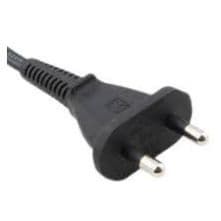
Plugs and Socket-Outlets for household use and similar purpose are important components in electrical systems in residences, businesses, industries, providing safe and effective connections for power distribution. Proper electrical connections using certified plugs and sockets provide appropriate electrical contacts, low risks of electric shocks, and reliable operation while in use. Considering their important role in electrical safety, manufactures have to meet the requirements stated in BIS IS 1293: 2019 related to plugs and sockets not exceeding 250 volts and 16 amperes.
The requirements for plugs and sockets are mentioned in the Indian Standard as the technical requirements regarding the material used, insulation resistance, contact pressure, temperature rise, mechanical strength and electrical endurance. It is required by law that manufacturers meet the BIS Quality Control Orders (QCO) for plug sockets as stated in the Indian Standard IS 1293: 2019, before they can be put into manufacture or sale in India.
What is IS 1293:2019 for Plugs and Socket Outlets
This is the Indian Standard for plugs and socket-outlets used for household and similar purposes with rated voltage up to and including 250 V and rated current up to and including 16 A. It specifies key safety and performance criteria to ensure reliable and safe electrical connections in domestic and similar installations. As per the BIS (Bureau of Indian Standards), plugs and socket-outlets are:
- Tested for electrical contact integrity and contact pressure
- Evaluated for insulation resistance and dielectric strength
- Checked for temperature rise under normal load conditions
- Verified for mechanical strength and durability of construction
- Assessed for proper earthing continuity and safety features
Benefits of BIS Certification for Plugs and Socket-Outlets (IS 1293: 2019)
BIS ISI Certification of Plugs and Socket-Outlets for Household and Similar Purposes (IS 1293: 2019) is necessary to ensure that the products comply with the basic safety and quality standards needed for the use of electrical equipment in India. Obtaining an ISI mark certifies compliance with the Indian Standard, and at the same time, contributes to improving the safety of products and their high demand on the market. Products certified by the BIS organization are popular due to their high safety indicators and durability.
- Approved Guarantee of Safety: The ISI mark guarantees that the products meet the standards of the Bureau of Indian Standards, thus providing security during the use of electricity.
- Mandatory Compliance Requirement: Certification is a mandatory requirement for plugs and sockets up to 250V and 16A, otherwise the penalty may occur.
- Higher demand for BIS certified products: Demand for BIS certified products is higher in government and private sectors than non-certified products.
- Increased Customer Satisfaction: End customers favor using certified products as they provide security and reliability.
- High Credibility: Obtaining certification contributes to building a good company reputation.
- Better Business Opportunities: Compliance with BIS improves the business opportunities within the industry.
Eligibility Criteria for Electrical Plug Sockets BIS License
BIS authorisation under IS 1293: 2019 is required for businesses involved in manufacturing, importing, or supplying household socket outlets in India.
Applicable to:
- Manufacturers (India) - Must get BIS approval if domestic plug sockets are covered under QCO.
- Foreign Manufacturers - Need certification to export the product to India.
- Importers/Brand Owners - Must ensure that the power sockets are BIS-certified before selling.
- Sellers/Distributors - Should only sell certified electrical plugs & sockets.
Testing and Inspection Requirements
To ensure safe performance of plugs and socket-outlets for household and similar purposes (rated up to 250 V and 16 A), the Bureau of Indian Standards outlines the minimum requirements under IS 1293: 2019. This certification ensures that manufacturers have consistent design and production standards. It also ensures that the plugs and socket-outlets provide secure electrical contact, proper insulation, and stable operation under normal use. The BIS testing parameters and quality checks for the plugs and socket-outlets are listed below:
| Test Group | What is Tested | Purpose |
|---|
| Dimensional Checks | Dimensions of plugs, socket-outlets, pins, and contact parts | Ensures proper fit, interchangeability, and standard conformity |
| Protection Against Electric Shock | Access to live parts, safety of shutters, insulation barriers | Ensures user safety from accidental electric shock |
| Earthing Tests | Continuity and resistance of earthing connection | Ensures safe grounding and protection against fault currents |
| Terminal Strength Tests | Screw and screwless terminal performance under load | Ensures secure electrical connections without loosening or damage |
| Constructional Requirements | Design of plugs, socket-outlets, and internal assembly | Ensures proper structural design and functional reliability |
| Mechanical Strength Tests | Impact, shock, and durability under physical stress | Ensures product withstands handling, installation, and usage stress |
| Thermal & Temperature Rise Tests | Temperature rise under rated current load | Ensures safe operation without overheating |
| Electric Strength Tests | Dielectric withstand / flash testing | Ensures insulation integrity under high voltage conditions |
| Insulation Resistance Tests | Resistance between live parts and body/earth | Ensures electrical safety and leakage prevention |
| Protection Against Ingress (IP Tests) | Resistance to dust, solid objects, and moisture | Ensures durability in environmental exposure |
| Normal Operation Tests | Plug insertion, withdrawal, switching cycles | Ensures reliable everyday functional performance |
| Breaking & Making Capacity | Switching performance under load conditions | Ensures safe connection and disconnection under load |
| Withdrawal Force Tests | Force required to insert and remove plug | Ensures proper grip and secure electrical contact |
| Flexing & Cord Retention Tests | Cable strain relief and bending resistance | Ensures cable durability and prevents loosening |
| Resistance to Heat & Fire | Heat resistance, glow-wire test, flame resistance | Ensures fire safety and material stability |
| Creepage & Clearance Tests | Distance between conductive parts | Ensures prevention of electrical arcing or breakdown |
| Aging & Environmental Tests | Long-term performance under heat and humidity | Ensures product durability over time |
| Corrosion Resistance Tests | Resistance to rusting and material degradation | Ensures long service life in humid conditions |
| Low Temperature Impact Tests | Mechanical strength at low temperatures | Ensures material does not crack or fail in cold conditions |
| Tracking Resistance Tests | Resistance to surface electrical tracking | Ensures insulation reliability under pollution and moisture |
| Screws & Connections Tests | Torque, tightening strength, and joint stability | Ensures secure electrical and mechanical connections |
Power Socket BIS Approval Process
The BIS Authorisation process ensures that the electrical wiring accessories meet the required standards for efficient operation. This process is set by the Bureau of Indian Standards (BIS) and includes the following steps:
- Online Registration : Manufacturers register on the BIS Manak portal by submitting company, factory, and product details. Foreign manufacturers must appoint an Authorized Indian Representative (AIR).
- Testing at BIS-Approved Laboratory: Product samples are tested in BIS-approved laboratories for electrical safety, dielectric strength and mechanical performance.
- Application Submission: The application is submitted along with test reports, technical documents, and factory details. Foreign manufacturers must also submit AIR-related documents.
- Factory Inspection: BIS officials inspect the manufacturing units to verify the production process, safety measures, and quality control system.
- Grant of BIS License: Once all requirements are successfully fulfilled, BIS grants the certification license under Scheme-I.
- Use of ISI Mark: After approval, the manufacturer is permitted to apply the ISI mark along with the CM/L number, indicating conformity with BIS standards.

List of Documents for IS 1293: 2019 Approval
| Document Category | Documents Required |
|---|
| Basic Details | GST Certificate, Email ID & Contact Number, Factory & Office Address, Rent Agreement / Lease Deed (if applicable),Partnership Deed (if applicable for partnership firms) |
| Manufacturing Details | List of Machinery, Process Flow Chart, Factory Layout Plan |
| Raw Material Details | List of Raw Materials, Supplier Details, Raw Material Invoices, Raw Material Test Certificates |
| Testing & Quality Control | List of Testing Equipment, Calibration Certificates, QC/Lab In-charge Appointment Letter & Qualification |
| Production Details | Annual Installed Capacity, Last Year Production Value |
| Product & Packaging Details | Quantity per Package, Nature of Packing, Product Printing / Marking Details |
| Management Details | Top Management Details, BIS Communication Contact Person |
| Brand & Certification Documents | Trademark / Brand Certificate, Consent Letter from BIS Recognized Laboratory |
| Additional Documents | Weekly Off Details, Hygiene Document (if applicable), Relaxation Letter (if applicable), Any Other Relevant Document |
| Foreign Manufacturer Requirement | Appointment of Authorized Indian Representative (AIR) for BIS coordination and compliance in India |
Foreign manufacturers must appoint an Authorized Indian Representative (AIR) in India. This person will work with the Bureau of Indian Standards (BIS) and take care of all rules and compliance work in India.
BIS Marking Guidelines for Electrical Plugs and Socket-Outlets under IS 1293:2019
After receiving BIS approval of plug/socket-outlets according to IS 1293: 2019, the ISI mark must be mandatorily imprinted on the product and/or the packaging material thereof. Besides the ISI mark, important information such as the manufacturer's name, brand name, if any, and the BIS licence number (CM/L) is a mandatory requirement. The marking ensures compliance of the product with all required standards related to safety and quality as per the Bureau of Indian Standards. The following are additional important points:
| Requirement | Details |
|---|
| ISI Mark | Indicates that the product is BIS certified and conforms to standards |
| Standard Number | IS 1293: 2019 |
| CML Number | Certification Marks License (CML) number issued by BIS |
| Manufacturer Details | Name of manufacturer or registered trademark |
| Batch / Date | Batch number, heat number, or manufacturing date for traceability |
Note: Marking is typically applied using durable stamping, tagging, or permanent printing to ensure clear identification during handling, storage, and transportation, as per BIS marking requirements.
BIS License Validity and Renewal Process for Plugs and Socket-Outlets under IS 1293
| particulars | Details |
|---|
| Initial Validity | Typically 1 to 2 years, depending on BIS approval conditions |
| Renewal | Must be renewed before expiry by submitting the application along with the prescribed fee and updated documents |
| Surveillance | Includes periodic factory inspections and market sample testing conducted by BIS |
| Compliance | Continuous following to standard and applicable Quality Control Orders (QCOs) is mandatory |
| Risk | Non-compliance or failed sample testing may lead to suspension or cancellation of the BIS license |
Pricing Structure for BIS Approval of Electrical Plugs and Sockets in India
The cost of BIS Approval for an electrical plug & socket outlet includes charges for application, inspection, license, testing, and marking. These fees are paid to BIS as per Scheme I guidelines.
| Charge Type | Indian Manufacturers | Foreign Manufacturers |
|---|
| Application Fee | INR 1,000 | USD 15 |
| Audit Charges | INR 7,000 | USD 3,200 - 5,900 |
| License Fee | INR 1,000 | USD 15 |
| Marking Fee | As applicable | As applicable |
| Testing Charges | As applicable | As applicable |
| EVTL India Consultancy Fee | As per actual | As per actual |
Note:
- Application fee for foreign manufacturers is payable via SWIFT (SAARC countries may pay in INR with applicable GST).
- Audit charges for foreign manufacturers vary based on country/location.
- Marking fee depends on the product category and production volume (MSME benefits may apply).
- Testing charges are directly payable to BIS-recognised laboratories.
- Consultancy fees depend on product type and factory location.
Risks of Selling Non-Certified Plugs and Socket-Outlets in India
The manufacturers and importers have to abide by the relevant standards IS 1293: 2019 before marketing their plugs and socket-outlets in India. The non-conformity with the requirements set by BIS could bring a number of negative effects for the businesses, from regulatory and procedural issues to reduced trust among customers. The reason is that such products deal with electricity directly; thus, strict compliance control procedures apply to these goods.
- Restriction of product placement: Non-certified products will not be legally produced, imported, marketed or sold in India.
- Enforcement activities: Authorities may conduct audits or any other activities to enforce compliance with BIS requirements.
- Decreased buyer satisfaction: Buyers tend to prefer products that have been certified by ISI.
- Partnerships at risk: The non-conformity with the required standards may negatively influence the cooperation with dealers, contractors and procurement agencies.
- Competitive disadvantage: Products with the mark enjoy higher consumer recognition in the market.
Conclusion
Plug and socket-outlet are some of the most popularly used electrical accessories for residential, commercial, office use, and other such settings. Electrical accessories play an important role in ensuring safe electrical connectivity of various equipment and appliances. For manufacturers to ensure user safety and reliable performance, the IS 1293: 2019 standard is required to be complied with for any product intended for consumer use in India. This standard specifies the important requirements for plugs and socket-outlets up to rated voltage of 250 volts and rated current up to 16 Amperes. BIS certification for plugs and socket-outlets according to IS 1293: 2019 ensures the product complies with the prescribed Indian Standards and is eligible for ISI Marking.
This certification ensures that the product meets the mandatory safety and quality requirements and provides the manufacturer the confidence of meeting customer expectations in the market, as well as other requirements such as QCO. With end-to-end support from EVTL India, you can have an easy experience while obtaining BIS certification for your product.