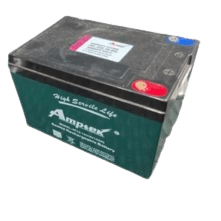
Lead-acid storage batteries for motor vehicles are widely used to provide power for
starting, lighting, and ignition (SLI) functions in cars, bikes, and other automobiles.
These batteries are designed to deliver high cranking power, ensuring smooth engine
start even under demanding conditions. To regulate their performance and
standardization in the Indian market, these batteries are covered under IS 7372:1995,
the Indian Standard specified by the Bureau of Indian Standards (BIS). BIS certification
under this standard ensures that the batteries meet the required specifications for
manufacturing, testing, and market supply in India.
Who Needs BIS Certification for Lead-Acid Storage Batteries?
BIS certification under IS 7372:1995 is required for businesses involved in the
manufacturing, import, or sale of these automotive batteries in India.
Applicable to:
- Manufacturers – Producing batteries in India
- Importers – Bringing batteries from other countries into India
- Brand Owners—Selling product under their own brand name in the
Indian market
What is IS 7372:1995?
This is the Indian Standard that defines the requirements for lead-acid storage batteries
used in motor vehicles. It is issued by the Bureau of Indian Standards (BIS) to regulate
how these batteries should be manufactured and supplied in the Indian market.
This standard ensures that these batteries:
- Deliver sufficient cranking power for engine starting
- Meet specified electrical performance parameters
- Are suitable for use in different types of motor vehicles
- Follow defined guidelines for design and construction
Testing and Inspection Requirements for Lead-Acid Storage Batteries
To ensure proper performance in vehicles, the standard specifies testing and inspection
requirements for these batteries during manufacturing and quality checks.
What are R and S?
- R (Required): Test must be conducted in the manufacturer’s in-house laboratory
- S (Subcontracting Allowed): Test can be conducted in a BIS-approved or
NABL-accredited laboratory
Electrical Performance Tests
- Capacity Test (R) – Measures the battery’s ability to deliver the required current
over time
- Cold Cranking Performance Test (R)—Checks starting power under
low-temperature conditions
- High Rate Discharge Test (S)—Verifies performance under heavy load
conditions
Charge & Efficiency Tests
- Charge Acceptance Test (R) – Ensures the battery can accept charge efficiently
- Charge Retention Test (S) – Checks how well the battery retains charge over
time
Construction & Design Checks
- Container Leak Test (R) – Ensures no leakage from the battery container
- Terminal Strength Test (R) – Verifies terminals can withstand mechanical stress
- Separator & Plate Inspection (S) – Confirms internal components meet
specified design requirements
Durability & Life Tests
- Cycle Life Test (S) – Checks performance over repeated charge and discharge
cycles
- Vibration Resistance Test (S) – Ensures the battery can handle vehicle
movement and vibrations
Safety & Reliability Tests
- Overcharge Test (S) – Verifies behavior under overcharging conditions
- Short Circuit Test (S) – Checks safety under accidental short circuit situations
BIS Certification Process for Lead-Acid Batteries

The BIS certification process ensures that these vehicle batteries meet the required
standards for proper and efficient operation. This process is defined by the Bureau of
Indian Standards (BIS) and includes the following steps:
- Online Registration: Manufacturers register on the BIS Manak portal by submitting company, factory,
and product details. Foreign manufacturers must appoint an Authorized Indian
Representative (AIR).
- Testing at BIS-Approved Laboratory: Product samples are tested in BIS-approved labs to check durability and
efficiency.
- Application Submission: The application is submitted along with test reports, technical documents, and
factory details. Foreign manufacturers must also submit AIR-related documents.
- Factory Inspection: BIS officials inspect the manufacturing unit to verify the production process,
safety measures, and quality control system.
- Grant of BIS License: If all requirements are met, BIS grants the certification license under Scheme-I.
- Use of ISI Mark: After approval, the manufacturer can use the ISI mark on products with a CM/L
number, confirming that the product meets BIS standards.
Documents Required for IS 7372 Certification
The following documents are typically required for obtaining BIS certification:
| Basic Details | - GST Certificate
- Email ID & Contact Number
- Factory & Office Address
- Rent Agreement / Lease Deed (if applicable)
|
| Legal Documents | - Partnership Deed (if partnership firm)
|
| Manufacturing Details | - List of machinery
- Process flow chart
- Layout Plan of Factory
|
| Raw Material Details | - List of Raw Materials
- Supplier Details
- Raw Material Invoices
- Raw Material Test Certificates
|
| Testing & Quality Control | - List of Testing Equipment
- Calibration Certificates
- QC / Lab In-charge Appointment Letter & Qualification
|
| Production Details | - Annual Installed Capacity
- Last Year Production Value
|
| Product & Packaging Details | - Quantity per Package
- Nature of Packing
- Nature of Printing / Marking on Product
|
| Management Details | - Top Management Details
- Concerned Person for BIS Communication
|
| Brand & Certification Documents | - Trademark / Brand Certificate
- Consent Letter from BIS Recognized Laboratory
|
| Additional Documents | - Weekly Off Details
- Hygiene Document (if applicable)
- Relaxation Letter (if applicable)
- Any Other Relevant Document
|
Foreign manufacturers must additionally appoint an Authorized Indian Representative
(AIR) to coordinate with the Bureau of Indian Standards (BIS) and manage compliance
requirements in India.
Marking Requirements & License Validity
Marking Requirements
When a manufacturer obtains the BIS license, the ISI mark for lead acid storage
batteries must be applied clearly and permanently on the product or its packaging. In
addition to the ISI Mark, other important details must also be provided on the product or
packaging, as specified in the table below.
| Requirement | Details |
|---|
| ISI Mark | Confirms BIS certification and standard
compliance
|
| Standard Number | IS 7372
|
| CML Number | Certification marks license number issued by BIS |
| Manufacturer Details | Name of manufacturer or registered trademark |
| Batch / Date | Manufacturing date or batch number for traceability |
Note: Marking should be applied using durable methods such as stamping, tagging, or
permanent printing for long-term visibility.
Validity of BIS License for Vehicle Batteries
| Particulars | Details |
|---|
| Initial Validity | Typically 1 to 2 years, depending on BIS approval conditions |
| Renewal | Must be renewed before expiry by submitting the application along with the prescribed fee and updated documents |
| Surveillance | Includes periodic factory inspections and market sample testing conducted by BIS |
| Compliance | Continuous following to standard and applicable Quality Control Orders (QCOs) is mandatory |
| Risk | Non-compliance or failed sample testing may lead to suspension or cancellation of the BIS license |
BIS Certification Cost for lead-acid batteries
The cost of BIS certification includes charges for application, inspection, license, testing,
and marking. These fees are paid to BIS as per Scheme I guidelines.

Cost Breakdown
Indian Manufacturers
| No. | Major Charges | Particulars | Amount | Remark |
| 1 | BIS Fees | Application Fee | INR 1,000 | — |
|
| Audit / Inspection Fee | INR 7,000 | — |
|
| License Fee | INR 1,000 | — |
|
| Marking Fee | Depends on product | Discount as per MSME |
| 2. | Testing Charges | Sample Testing Fee | As Applicable | Payable to a BIS-approved laboratory. |
| 3. | EVTL India Service Fee | Consultancy & Support | As per actual | Depends on product type and factory location. |
Foreign Manufacturers
| No. | Major Charges | Particulars | Amount | Remark |
| 1. | BIS Fees | Application Fee | USD 15 | Payable via SWIFT to BIS. SAARC countries can pay INR with 18% GST. |
|
| Audit Charges | USD 3,200 – 5,900 | Depend on Country |
|
| License Fee | USD 15 | — |
|
| Marking Fee | Depends on product | — |
| 2. | Testing Charges | Sample Testing Fee | As Applicable | Payable to a BIS-approved laboratory. |
| 3. | EVTL India Service Fee | Consultancy & Support | As per actual
| Based on product and manufacturing location. |
Note: Additional costs such as pre-testing or factory pre-inspection may apply. The total
cost may vary depending on product type, testing requirements, and current BIS
Conclusion
BIS certification for lead-acid storage batteries for motor vehicles as per IS 7372:1995
ensures that the product meets the required Indian Standard for automotive
applications. It confirms that the batteries are properly tested for electrical performance,
cranking ability, charge efficiency, and operational stability, making them suitable for use
in vehicles under different conditions.
With the support of an experienced BIS consultant like EVTL India, businesses can
complete the certification process in a structured way, reduce the chances of rejection,
and get approval without unnecessary delays.