
Beyond the Deadline Extension: What the 2027 Footwear QCO Update Means for Businesses
Introduction
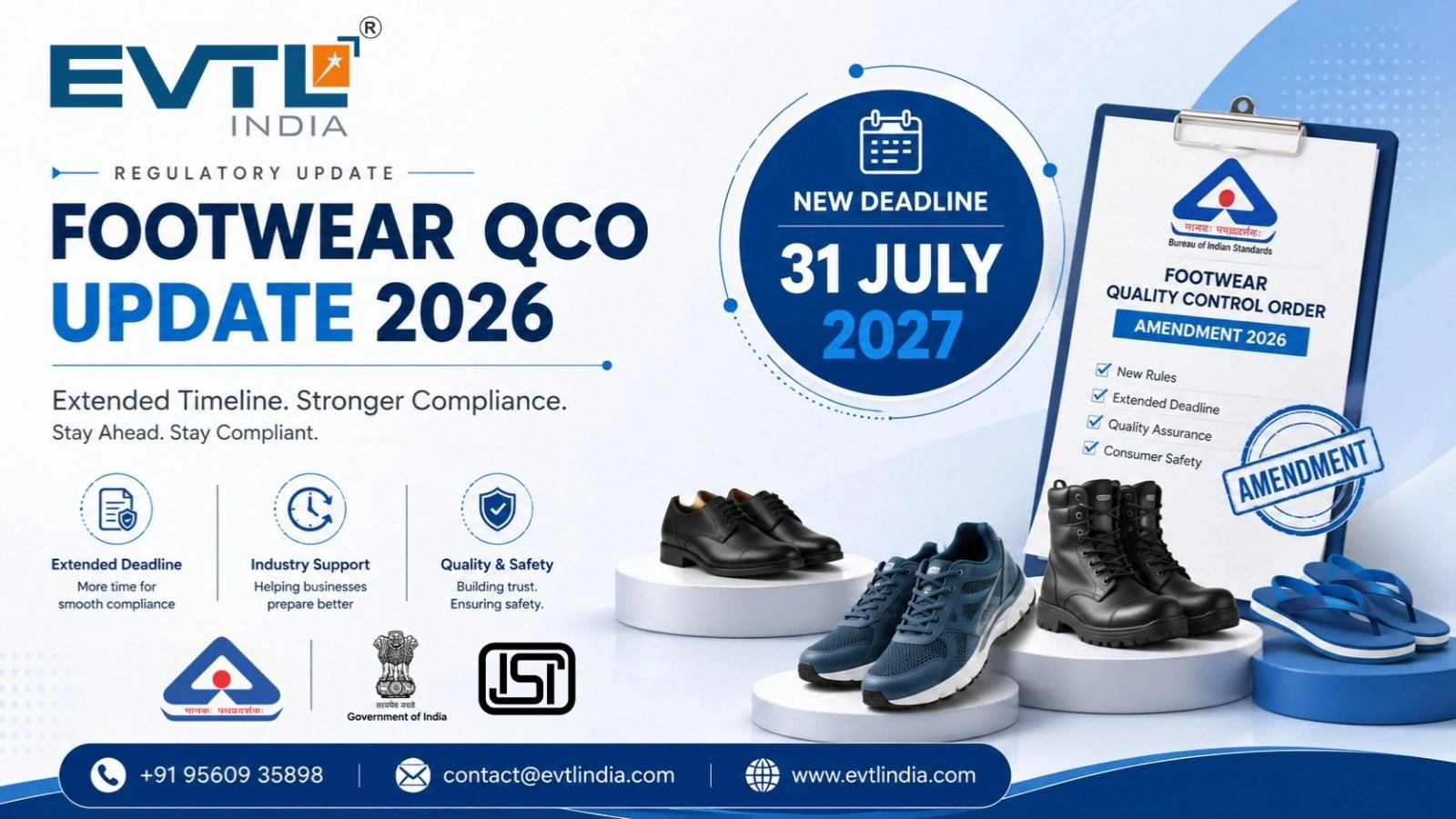
The Government of India has announced a major relief for Micro and Small Enterprises (MSEs) operating in the non-leather footwear sector by extending the compliance deadline under the Footwear Quality Control Order (QCO) until 31 July 2027. The decision provides an additional year for eligible manufacturers to align with mandatory BIS certification and quality requirements.
At first glance, this may appear to be a simple extension. However, the real significance lies in what this update means for manufacturers, importers, brands, and supply chain stakeholders across the footwear industry.
Understanding the Background
India's footwear sector has been gradually brought under the Quality Control Order framework to ensure that products sold in the market comply with prescribed Indian Standards and quality benchmarks. Various QCOs have already been implemented for leather footwear, rubber footwear, polymeric footwear, and personal protective footwear products.
The objective behind these regulations is to improve product quality, protect consumers from substandard products, strengthen domestic manufacturing, and create a level playing field for compliant businesses.
What Has Changed?
Under the latest notification, Micro and Small Enterprises in the non-leather footwear segment have been granted an additional year to comply with the mandatory quality norms. The revised deadline is now 31 July 2027 instead of the earlier timeline.
The extension primarily benefits smaller manufacturers who require additional time to:
- Obtain BIS certification
- Upgrade manufacturing processes
- Establish quality control systems
- Complete product testing
- Align documentation and compliance procedures
Why This Extension Matters
1. More Time, But Not a Relaxation of Compliance
Many businesses may interpret the extension as a postponement of regulatory requirements. In reality, the quality standards remain unchanged.
The government has extended the implementation timeline, not removed the compliance obligation. Manufacturers will still need to obtain the required BIS approvals before the revised deadline.
2. Opportunity for Small Manufacturers
For many MSME footwear units, certification costs, testing requirements, and infrastructure upgrades have been significant challenges.
The additional year provides breathing space for businesses to plan investments, improve quality systems, and prepare for long-term compliance without facing immediate regulatory pressure.
3. Stronger Focus on Product Quality
India's QCO framework is part of a broader strategy to improve product quality across industries.
Once fully implemented, footwear products covered under the QCO will be required to conform to relevant Indian Standards and carry valid BIS certification, helping improve consumer confidence and reduce the circulation of substandard products.
4. Impact on Importers and Brands
The extension is particularly relevant for manufacturers, but importers and brand owners should not assume that compliance preparation can be delayed indefinitely.
Imported footwear products covered under applicable QCOs must eventually comply with BIS requirements, and businesses that rely on overseas manufacturing should continue preparing their certification strategy.
What Businesses Should Do Now
Instead of waiting until 2027, footwear manufacturers should use this period strategically:
- Identify applicable Indian Standards for their products
- Conduct gap assessments of manufacturing facilities
- Arrange testing through BIS-recognized laboratories
- Prepare technical documentation
- Implement quality management procedures
- Initiate BIS certification applications early
Early compliance helps avoid last-minute bottlenecks and reduces the risk of disruptions when the extended deadline approaches.
The Bigger Industry Signal
The 2027 extension reflects a balanced regulatory approach. The government is continuing its quality-focused agenda while acknowledging the practical challenges faced by smaller manufacturers.
Rather than viewing this as a delay, businesses should see it as an opportunity to strengthen operational capabilities, improve product quality, and become more competitive in both domestic and international markets. The direction of policy remains clear: quality compliance is becoming an essential part of doing business in India's footwear sector.
Conclusion
The extension of the Footwear QCO deadline to July 2027 offers valuable relief for micro and small footwear manufacturers, but it should not be mistaken for a permanent exemption. The compliance requirements remain firmly in place, and businesses that begin preparing now will be in a far stronger position when enforcement becomes fully effective.
For manufacturers, importers, and brands, the message is simple: the deadline has moved, but the industry's transition toward mandatory quality compliance continues. Those who use this additional time wisely will gain a significant advantage in the evolving Indian footwear market.