
Cotton Bales QCO Withdrawal Explained: Industry Impact and Future Outlook
Introduction
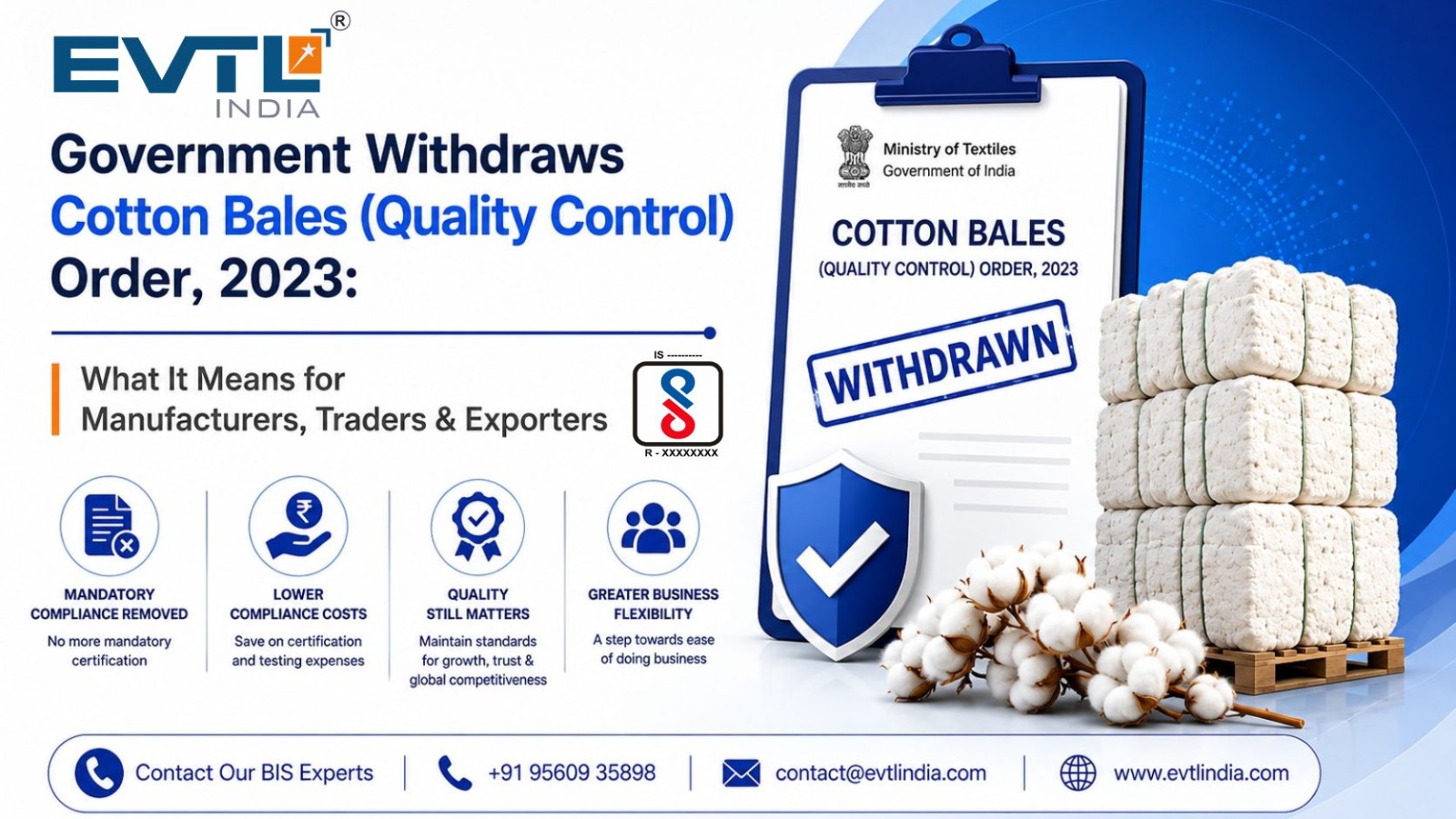
In a significant regulatory development for India's cotton sector, the Ministry of Textiles has officially withdrawn the Cotton Bales (Quality Control) Order, 2023 through a Gazette Notification issued on 9 June 2026. The decision, taken after consultation with the Bureau of Indian Standards (BIS), has come into effect immediately and marks a major shift in the government's approach toward quality regulation in the cotton industry.
The withdrawal has attracted considerable attention from manufacturers, traders, ginning units, exporters, and textile businesses across the cotton value chain. While the move removes mandatory compliance requirements previously imposed under the Quality Control Order (QCO), it also raises important questions about quality assurance, industry competitiveness, and the future regulatory landscape.
Understanding the Cotton Bales QCO
The Cotton Bales (Quality Control) Order, 2023 was introduced by the Ministry of Textiles to establish quality standards for cotton bales manufactured and sold in India.
Key Timeline
- Original Order Issued: 28 February 2023
- Published in Gazette: 1 March 2023
- Amendment 1: August 2023
- Amendment 2: August 2024
- Amendment 3: July 2025
- Withdrawal Notification: 9 June 2026
The primary objective of the QCO was to ensure that cotton bales complied with specified Indian Standards and quality requirements. Under the framework, manufacturers were required to adhere to prescribed quality norms, undergo compliance procedures, and meet regulatory requirements before placing products in the market. In practical terms, cotton bales that did not meet the prescribed standards could not be legally sold in India.
What Has Changed?
With the issuance of the withdrawal notification dated 9 June 2026, the Cotton Bales (Quality Control) Order, 2023 has been completely revoked.
As a result:
- The QCO is no longer applicable.
- Mandatory compliance requirements have been removed.
- Businesses are no longer legally obligated to follow the earlier certification framework for cotton bales.
- Regulatory restrictions associated with the order have ceased with immediate effect.
However, the notification also clarifies that any actions, approvals, inspections, investigations, or proceedings undertaken under the previous order remain valid and legally enforceable.
Why Was the QCO Withdrawn?
The official notification states that the decision was taken in the "public interest" after consultation with the Bureau of Indian Standards (BIS). Although specific reasons have not been detailed by the government, industry experts believe several factors may have influenced the decision:
- Industry Feedback: Various stakeholders in the cotton sector had raised concerns regarding the practical challenges associated with implementing mandatory quality compliance across thousands of cotton processing and ginning units.
- Compliance Costs: Many businesses, particularly small and medium-sized enterprises (MSMEs), faced additional expenses related to testing, documentation, inspections, certification procedures, and quality control systems.
- Implementation Challenges: Ensuring uniform compliance across India's diverse cotton-producing regions presented operational difficulties for both businesses and regulatory authorities.
- Ease of Doing Business: The withdrawal aligns with broader government initiatives focused on reducing regulatory burdens, simplifying compliance requirements, and improving the ease of doing business.
Industry Impact: What It Means for Businesses
The withdrawal is expected to have immediate effects across the cotton ecosystem.
Reduced Compliance Burden: Manufacturers and traders will no longer need to undertake mandatory certification-related procedures previously required under the QCO. This significantly reduces paperwork, administrative obligations, and regulatory oversight.
Cost Savings: Businesses can avoid expenses associated with:
- Product testing
- Certification procedures
- Documentation requirements
- Compliance management systems
- Regulatory approvals
These savings can be particularly beneficial for MSMEs operating on limited margins.
Faster Market Operations: Without certification-related delays, cotton bales can move through the supply chain more efficiently. Manufacturers and traders may experience faster product movement and reduced administrative bottlenecks.
Greater Business Flexibility: The withdrawal provides businesses with greater operational freedom while allowing market participants to respond more quickly to changing demand and supply conditions.
Does Quality Still Matter?
Absolutely. The withdrawal of mandatory compliance requirements does not diminish the importance of product quality. Quality remains a critical factor for:
- Export competitiveness
- Large institutional buyers
- Textile manufacturers
- International trade requirements
- Brand reputation
- Long-term customer relationships
Businesses that continue to follow recognized quality benchmarks voluntarily may gain a competitive advantage in both domestic and international markets. In today's marketplace, quality is increasingly viewed as a commercial necessity rather than merely a regulatory obligation.
Impact on the Textile Sector
The textile industry relies heavily on consistent and reliable cotton supplies. By removing mandatory certification requirements, the government has reduced the risk of supply disruptions that could have arisen from compliance-related bottlenecks.
The decision may also contribute to:
- Improved supply chain efficiency
- Lower operational costs
- Increased market flexibility
- Better availability of raw materials
- Enhanced competitiveness of Indian textile manufacturers
These benefits could support the broader growth objectives of India's textile and apparel sectors.
Future Outlook
While the Cotton Bales QCO has been withdrawn, quality enhancement remains an important priority for India's cotton industry. Going forward, the government may explore alternative approaches such as:
- Voluntary quality certification programs
- Industry-led quality initiatives
- Buyer-driven quality standards
- Incentive-based compliance models
- Revised regulatory frameworks developed in consultation with stakeholders
The focus is likely to shift toward encouraging self-regulation while maintaining product quality and international competitiveness.
What Should Businesses Do Now?
Industry stakeholders should consider the following actions:
- Continue maintaining quality standards voluntarily.
- Monitor future regulatory developments closely.
- Align products with customer and export market requirements.
- Strengthen internal quality control processes.
- Focus on consistency, traceability, and reliability.
Businesses that proactively maintain quality standards may be better positioned to capitalize on future market opportunities.
Conclusion
The withdrawal of the Cotton Bales (Quality Control) Order, 2023 marks a significant policy shift for India's cotton industry. From its introduction in February 2023 to its withdrawal in June 2026, the order underwent multiple amendments and implementation revisions before ultimately being revoked in the public interest.
The move offers immediate relief from mandatory compliance requirements and supports the government's objective of improving ease of doing business. At the same time, it places greater responsibility on industry participants to maintain quality standards voluntarily. As the sector moves toward a more flexible regulatory environment, businesses that continue to prioritize quality, consistency, and customer expectations will be best positioned for sustainable growth and long-term success.