CDSCO Registration for X Ray Machine
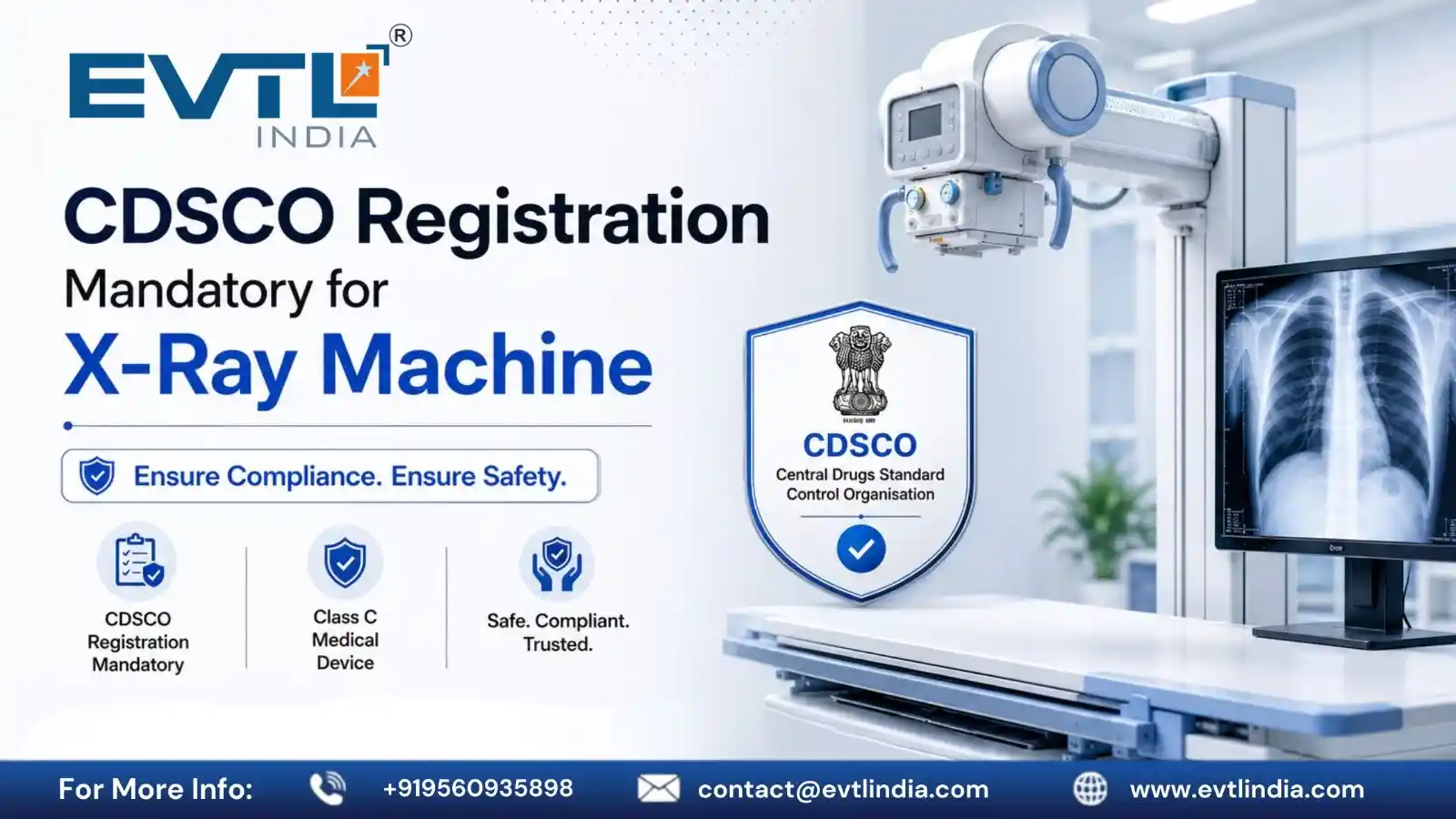
X-Ray Machines are important medical imaging devices widely used in hospitals, diagnostic centres, clinics, and healthcare facilities for diagnosing and monitoring various medical conditions. These devices use X-ray radiation to create detailed images of bones, organs, tissues, and other internal body structures, helping healthcare professionals detect fractures, infections, lung diseases, dental conditions, and other health disorders accurately. X-Ray Machines are commonly used for routine medical examinations, emergency diagnostics, surgical planning, and disease monitoring. With the growing demand for advanced diagnostic services and accurate medical imaging, the safety, quality, and performance of X-Ray Machines have become highly important in the healthcare sector. To regulate the manufacturing, import, and sale of these medical devices in India, the Government of India has made CDSCO Registration for X-Ray Machines mandatory under the Central Drugs Standard Control Organization (CDSCO).
What is CDSCO Certification for X-Ray Machine?
CDSCO Certification for X-Ray Machine is a mandatory regulatory approval required for the manufacturing, import, distribution, or sale of X-ray machines in India. This certification is issued by the Central Drugs Standard Control Organization (CDSCO) under the Ministry of Health and Family Welfare. X-ray machines are classified as medical devices because they are used for diagnostic imaging, disease detection, injury assessment, and medical examination in hospitals, clinics, diagnostic centres, and healthcare facilities.
According to the Medical Device Rules, 2017, X-ray machines must comply with the prescribed safety, quality, and performance standards before they can be introduced into the Indian market. Since these devices emit radiation and directly impact patient diagnosis and treatment, strict regulatory compliance is essential. Both Indian manufacturers and foreign importers are required to obtain CDSCO registration or the appropriate medical device licence based on the type of product and business activity.
The CDSCO certification procedure for X-Ray Machine generally involves –
- Identification of product category and risk classification
- Preparation of technical documents and compliance records
- Product testing and quality verification
- Submission of application through the CDSCO online portal
- Examination and approval by the regulatory authority
Types of X-Ray Machines Covered Under CDSCO
The Central Drugs Standard Control Organization (CDSCO) regulates various types of X-Ray Machines under the Medical Devices Rules, 2017. These devices are classified as medical devices because they use X-ray radiation to create images of internal body structures for diagnostic and medical examination purposes. X-ray machines are widely used in hospitals, diagnostic centers, clinics, dental facilities, and healthcare institutions for detecting injuries, diseases, and abnormalities. Depending on their intended use and risk classification, these devices are regulated under the CDSCO licensing framework.
The following types of X-Ray Machines are covered under CDSCO registration requirements –
- Conventional Radiography X-Ray Machine
- Digital Radiography (DR) X-Ray System
- Computed Radiography (CR) X-Ray System
- Portable X-Ray Machine
- Mobile X-Ray Machine
- Dental X-Ray Machine
- Intraoral Dental X-Ray System
- Panoramic Dental X-Ray Machine (OPG)
- Cephalometric X-Ray System
- Mammography X-Ray Machine
- Digital Mammography System
- Fluoroscopy X-Ray Machine
- C-Arm X-Ray Imaging System
- Computed Tomography (CT) Scanner
- Digital Angiography X-Ray System
- Interventional Radiology X-Ray System
- Veterinary X-Ray Machine
- Chest X-Ray Imaging System
- General Diagnostic X-Ray Equipment
These X-ray machines are extensively used for medical diagnosis, disease detection, surgical guidance, dental imaging, cancer screening, cardiovascular examinations, and emergency healthcare applications. Manufacturers and importers of these devices must obtain the required CDSCO registration or medical device license before manufacturing, importing, selling, or distributing them in the Indian market.
Manufacturers and importers must submit several documents during the CDSCO registration process for X-Ray Machines. Commonly required documents include –
The exact documentation requirements may vary depending on whether the X-Ray Machine is manufactured in India or imported from another country. CDSCO may also request additional documents during the review and approval process.
CDSCO Registration Process for X Ray Machine
The CDSCO registration process for X Ray Machines involves several important steps. Manufacturers and importers must complete each stage carefully to obtain the required approval and legally market the product in India.
- Product Classification: The first step is identifying the correct classification of the X Ray Machine under the Medical Devices Rules, 2017. X Ray Machines are regulated as medical devices, and their risk classification determines the applicable licensing requirements.
- Documentation Preparation: Applicants must prepare all required documents, including technical specifications, Device Master File (DMF), Plant Master File (PMF), ISO 13485 Certificate, test reports, product labels, user manuals, and quality management system documents.
- Appointment of Authorized Indian Agent: Foreign manufacturers must appoint an Authorized Indian Agent (AIA) who will act as their representative and coordinate with CDSCO for all regulatory matters in India.
- Online Application Submission: The application for registration or licensing is submitted through the CDSCO online portal along with the required documents and prescribed government fees.
- Technical Review by CDSCO: CDSCO evaluates the submitted application and verifies whether the X Ray Machine complies with the applicable safety, quality, and performance requirements.
- Query Resolution: If CDSCO raises any queries or requests additional information, the applicant must submit the necessary clarifications, supporting documents, or corrections within the specified timeline.
- Inspection and Audit (If Required): In certain cases, CDSCO may conduct a manufacturing site inspection or quality audit to assess compliance with regulatory and quality standards.
- Grant of License: After successful review and approval, CDSCO grants the applicable manufacturing or import license, allowing the X Ray Machine to be legally manufactured, imported, sold, and distributed in the Indian market.
Common Challenges Faced During CDSCO Registration
Obtaining CDSCO registration can be a complex process, particularly for manufacturers and importers who are unfamiliar with regulatory requirements. Several issues may arise during the application process, leading to delays or additional compliance obligations. Some of the most common challenges include:
- Incorrect identification of the medical device category and risk classification
- Submission of incomplete, inaccurate, or inconsistent documentation
- Non-compliance with labeling, packaging, and Instructions for Use (IFU) requirements
- Delays in arranging technical files, performance reports, and supporting data
- Limited knowledge of CDSCO regulations, licensing procedures, and online submission processes
- Difficulties related to import authorization, manufacturing approvals, or appointment of an Authorized Indian Agent
- Inadequate response to regulatory queries, deficiency letters, or requests for clarification
- Failure to meet applicable quality, safety, and regulatory standards
A well-planned compliance strategy, accurate documentation, and timely regulatory support can significantly streamline the CDSCO registration process. Proper preparation helps minimize the risk of application delays, regulatory objections, and approval rejections.
Conclusion
CDSCO Registration for X-Ray Machines is a mandatory regulatory requirement for manufacturers and importers who wish to legally market, distribute, or sell these medical imaging devices in India. As X-ray machines are extensively used for diagnostic examinations, disease detection, and patient assessment, ensuring their safety, performance, and quality is essential for delivering reliable healthcare services. The CDSCO registration framework helps verify that these devices comply with the applicable standards and regulatory provisions outlined under the Medical Device Rules, 2017. Although the registration process may involve detailed documentation, technical evaluations, and regulatory scrutiny, proper planning and professional assistance from EVTL India can make the process more efficient and hassle-free. Obtaining CDSCO certification not only fulfills legal compliance requirements but also strengthens product credibility, builds customer trust, and supports long-term business growth in the Indian healthcare sector.