
BIS Scheme X Certification for Cranes and Their Assemblies, Sub-Assemblies, or Components
In the world of heavy machinery and industrial infrastructure, cranes are indispensable for lifting, shifting, and placing materials with precision. These mechanical giants are employed across construction sites, ports, manufacturing facilities, and warehouses. Given the potential hazards associated with crane operation, the Indian government has mandated rigorous quality and safety standards to protect workers, infrastructure, and equipment.
To ensure uniform compliance across this crucial industry segment, the Bureau of Indian Standards (BIS) has introduced mandatory certification for all types of cranes and their assemblies, sub-assemblies, and components under the BIS Scheme X Certification framework. This step aligns India’s safety protocols with global standards and enhances trust in domestic and imported machinery.
Introduction to BIS Scheme X Certification
The BIS Scheme X Certification is a specialized regulatory mechanism developed by the Bureau of Indian Standards (BIS). It was officially launched on 16th March 2022, and is governed by the BIS Conformity Assessment Regulations, 2018. This scheme applies specifically to machinery and electrical equipment and aims to enhance the safety, reliability, and quality of these products.
As per the Omnibus Technical Regulation Order, 2024, issued by the Ministry of Heavy Industries, it is now mandatory for all manufacturers (domestic or foreign) to comply with Indian Standard requirements under Scheme X Certification by 28th August 2025 for products including cranes and related assemblies/components.
Why BIS Certification for Cranes is Necessary
The operation of cranes involves the handling of extremely heavy loads at considerable heights, making them high-risk equipment. Malfunctions due to inferior design, poor maintenance, or non-compliance with quality standards can lead to catastrophic accidents, loss of life, and major property damage.
The Omnibus Technical Regulation Order, 2024, makes it compulsory for all manufacturers to obtain BIS Scheme X certification for cranes and their assemblies/sub-assemblies/components by 28th August 2025. Non-compliance beyond this deadline may result in market restrictions, product recalls, legal action, and loss of business credibility. Hence, all stakeholders must initiate the certification process well in advance.
Key Benefits of BIS Certification for Cranes:
- Enhanced Safety: Certification ensures compliance with safety standards to prevent mechanical failure, accidents, and operational mishaps.
- Standardized Quality: Promotes uniform manufacturing standards across all types of cranes.
- Regulatory Compliance: Mandatory compliance under Indian law boosts legal assurance for suppliers and users.
- Global Market Access: Cranes with BIS certification are more likely to meet international standards, enhancing export potential.
- Consumer Confidence: The BIS mark is a trusted symbol of quality, increasing user trust in the product.
Scope of BIS Certification for Cranes
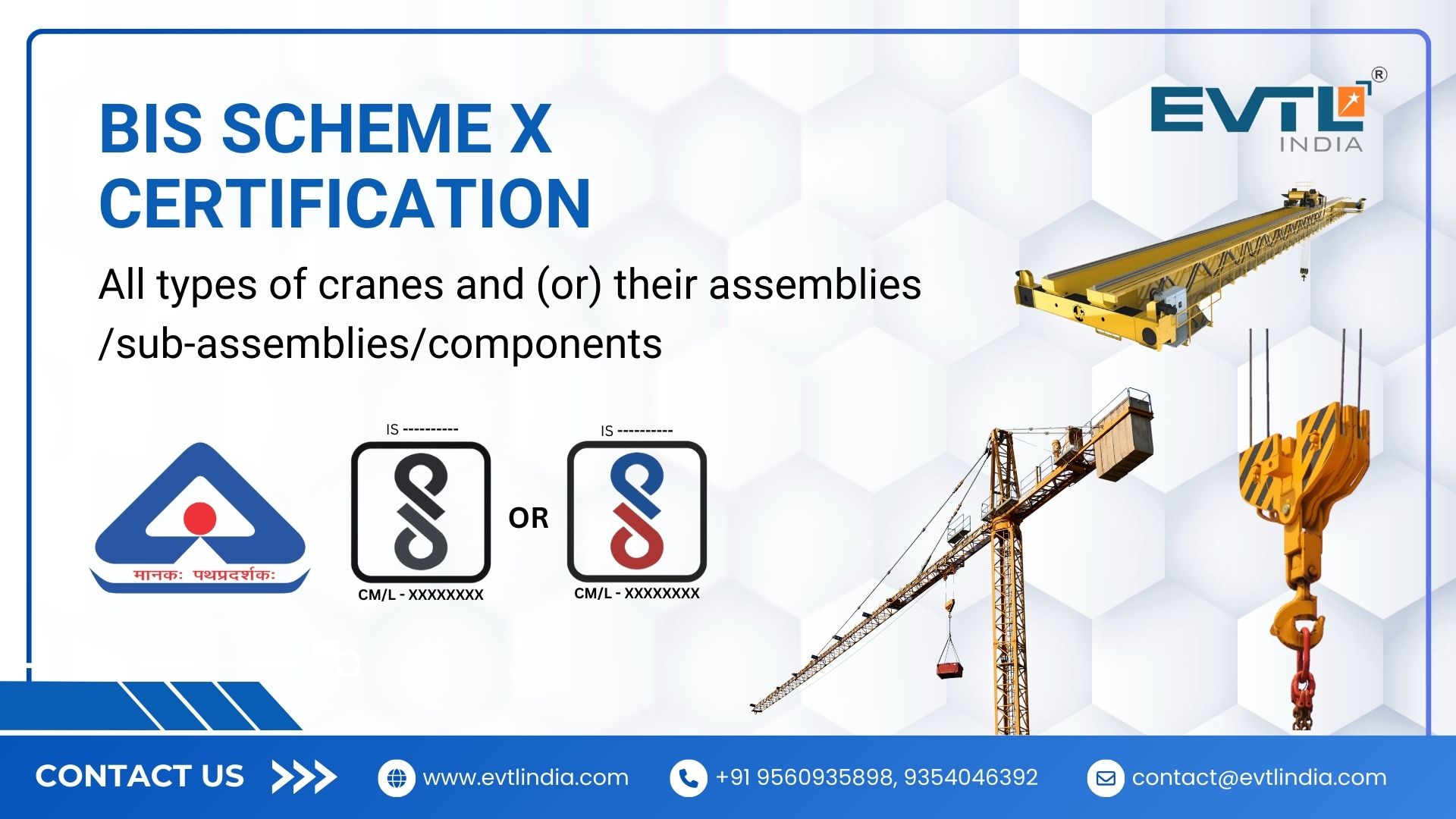
The mandate coversall types of cranes and (or) their assemblies / sub-assemblies / components, including but not limited to:
- Tower Cranes
- Mobile Cranes
- Overhead Cranes
- Gantry Cranes
- Jib Cranes
- Crawler Cranes
- Floating Cranes
- Telescopic Cranes
- Portal Cranes
Additionally, components such asjibs, hoists, sheaves, motors, gearboxes, wire ropes, andcontrol panelsused in crane systems are also included under this certification.
This inclusive approach ensures that not just the main machinery but also all supporting components adhere to Indian safety and quality standards.
BIS Scheme X Certification Process for Cranes
1. Application Submission
Manufacturers must submit detailed applications with technical specifications, design documents, and quality control plans for their cranes and components.
2. Product Testing
The machinery and its components undergo rigorous testing at BIS-recognized laboratories to ensure conformity to the relevant Indian Standards.
3. Factory Inspection
BIS officials carry out on-site inspections of the manufacturing unit to verify the implementation of proper production and quality control measures.
4. Certification Grant
After successful testing and inspection, BIS issues theScheme X certification, authorizing the manufacturer to affix theStandard Markon their crane systems.
5. Ongoing Surveillance
Periodic inspections and surveillance audits are conducted to ensure continuous compliance with the BIS Scheme X certification requirements.
Documentation Required for Certification
Manufacturers must maintain comprehensive documentation including:
- Detailed design and technical specifications
- Manufacturing process flowcharts
- Quality control and assurance procedures
- Safety and risk assessment reports
- Test certificates for components
- Compliance with applicable IS standards
Proper documentation speeds up the evaluation and inspection process and helps manufacturers avoid delays.
Conclusion
The mandate for BIS certification for cranes and their associated parts under Scheme X Certification is a landmark move by the Indian government to ensure the highest standards of safety and quality in heavy lifting equipment. Whether you are a manufacturer, importer, or user, understanding and adhering to this regulation is not only a legal obligation but also a strategic step towards building safer industrial environments.
With the 28th August 2025 deadline approaching, stakeholders must act promptly. Proactive engagement with the certification process and collaboration with BIS-accredited consultants can ensure compliance, reduce risks, and enhance product reputation in both domestic and international markets. For expert assistance or queries related to BIS Scheme X certification for cranes, consult EVTL India, a leading BIS consultant in India.