
Stainless Steel Flat Products Get Temporary BIS/QCO Relief Amid Supply Challenges
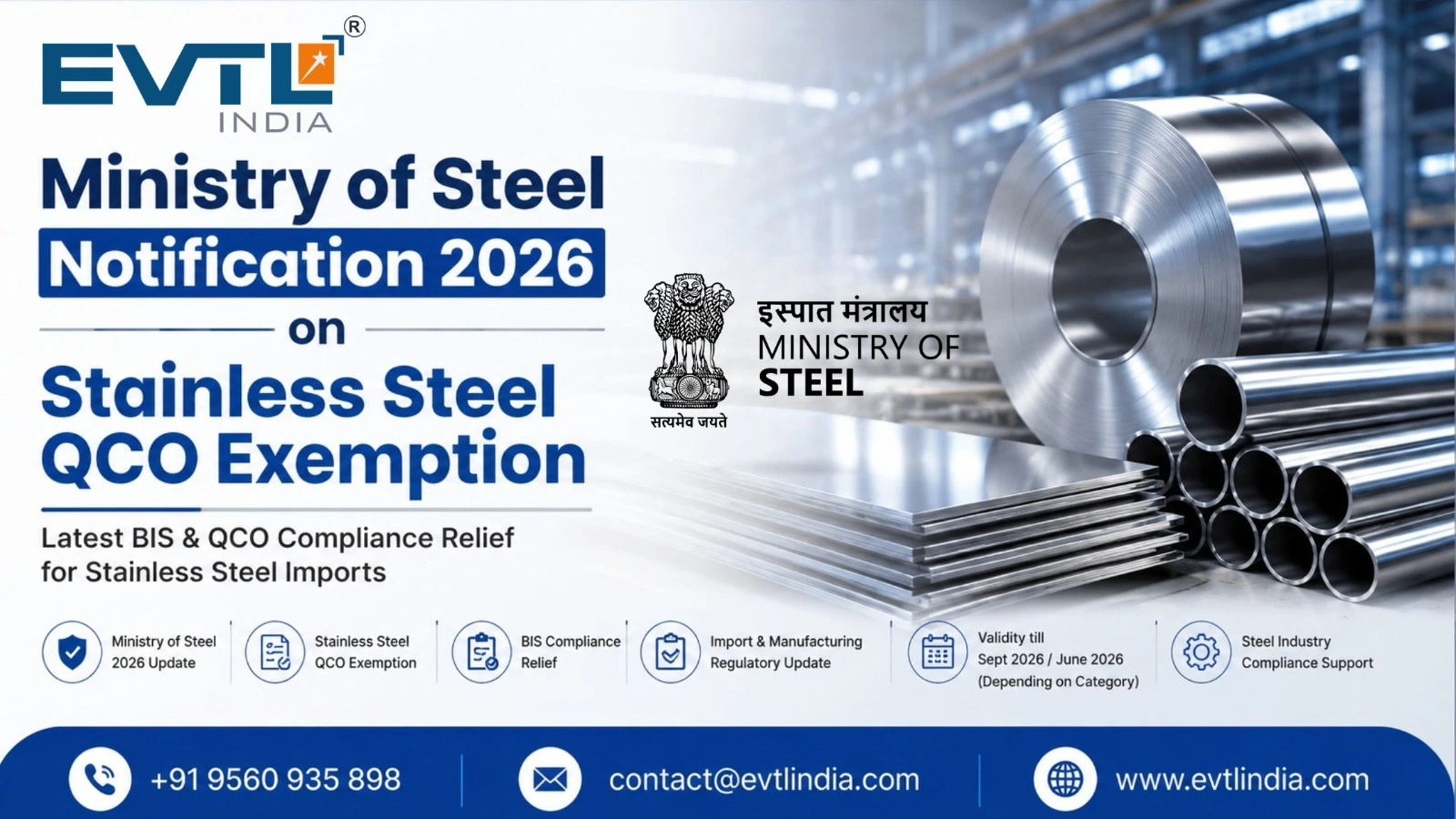
In a significant development for the Indian steel sector, the Ministry of Steel has announced temporary relief from mandatory BIS/QCO compliance for certain stainless steel flat products. The decision comes as a major support measure for manufacturers, importers, traders, and MSMEs facing growing supply chain and compliance-related challenges.
The exemption has been introduced after multiple industry representations highlighted operational difficulties, delays in imports, and increasing pressure caused by limited availability of BIS-compliant materials.
Products Covered Under the Exemption
The temporary exemption applies to stainless steel flat products covered under the following Indian Standards -
- IS 6911 – Stainless Steel Plate, Sheet & Strip
- IS 5522 – Stainless Steel Sheets & Strips for Utensils
- IS 15997 – Low Nickel Austenitic Stainless Steel
- IS 14650 – Intermediate Stainless Steel Flat Products
These products are widely used across industries such as kitchenware, fabrication, engineering, construction, industrial manufacturing, and consumer goods production.
Why This Relief Is Important
Over the past few years, Quality Control Orders (QCOs) have become an important part of India’s regulatory framework to improve product quality and safety standards. However, many businesses have also faced serious operational challenges due to compliance timelines and limited sourcing options.
For industries heavily dependent on imported raw materials and stainless steel inputs, BIS approval delays have created supply bottlenecks and disrupted production planning. This temporary exemption is expected to provide immediate operational flexibility and help stabilize material availability across several sectors.
Validity of the Exemption
The Ministry of Steel has clarified that the exemption will apply to imports where the Bill of Lading (BoL) shipment date is on or before -
- 26 October 2026
Eligible imports falling within this timeline may not require mandatory QCO compliance under the specified standards.
Major Industry Impact
Although the notification appears to be a temporary compliance relaxation, its practical impact on businesses is significant.
Relief for Importers
Importers dealing with stainless steel flat products are likely to benefit through -
- Reduced short-term compliance pressure
- Faster sourcing and procurement flexibility
- Better inventory and supply management
- Lower risk of shipment delays at ports
Support for MSMEs
Micro, Small, and Medium Enterprises (MSMEs) have been among the most affected by strict compliance timelines. Many smaller businesses struggle with -
- Product testing timelines
- Certification expenses
- Delayed customs clearances
- Limited access to approved suppliers
The exemption directly addresses these concerns and offers temporary operational breathing space.
Improved Supply Chain Stability
The move is also expected to support overall industrial continuity by helping businesses avoid -
- Raw material shortages
- Production slowdowns
- Cost escalation caused by compliance bottlenecks
- Delays in manufacturing cycles
Businesses Should Not Misinterpret the Relaxation
While the exemption provides short-term relief, industry experts believe businesses should avoid treating this as a permanent rollback of QCO requirements. The Ministry has only granted a temporary exemption, not a complete removal of BIS compliance obligations.
This distinction is extremely important because many companies often delay compliance preparation during temporary relaxations, only to face disruptions later when enforcement resumes.
What Smart Businesses Should Do During This Period
Companies involved in stainless steel imports and manufacturing should use this exemption period strategically by -
- Strengthening future BIS compliance readiness
- Reviewing long-term regulatory strategies
- Preparing technical documentation in advance
- Identifying BIS-compliant sourcing options
- Avoiding last-minute certification challenges
Businesses that prepare early will be in a much stronger position once regular QCO enforcement becomes fully active again.
Larger Regulatory Trend in India
This development also reflects a broader regulatory pattern visible across multiple sectors in India, including -
- Steel
- Chemicals
- Electronics
- Telecom
- Textiles
Regulators are increasingly trying to balance two major priorities simultaneously:
- Stronger product quality enforcement
- Industrial continuity and supply chain stability
The latest stainless steel exemption clearly demonstrates this balancing approach.
Conclusion
The Ministry of Steel’s latest notification offers important temporary relief for businesses dealing in stainless steel flat products amid ongoing supply and compliance challenges. However, the larger regulatory direction remains clear — India continues moving toward stricter quality enforcement and stronger BIS compliance mechanisms across industries. For businesses, this exemption should be viewed as an opportunity to improve preparedness rather than postpone compliance planning. Companies that use this window wisely will be far better equipped to manage future QCO enforcement and avoid operational disruptions in the long run.