
Morpholine Temporary Suspension of BIS Compliance: Important Amendment in QCO 2020
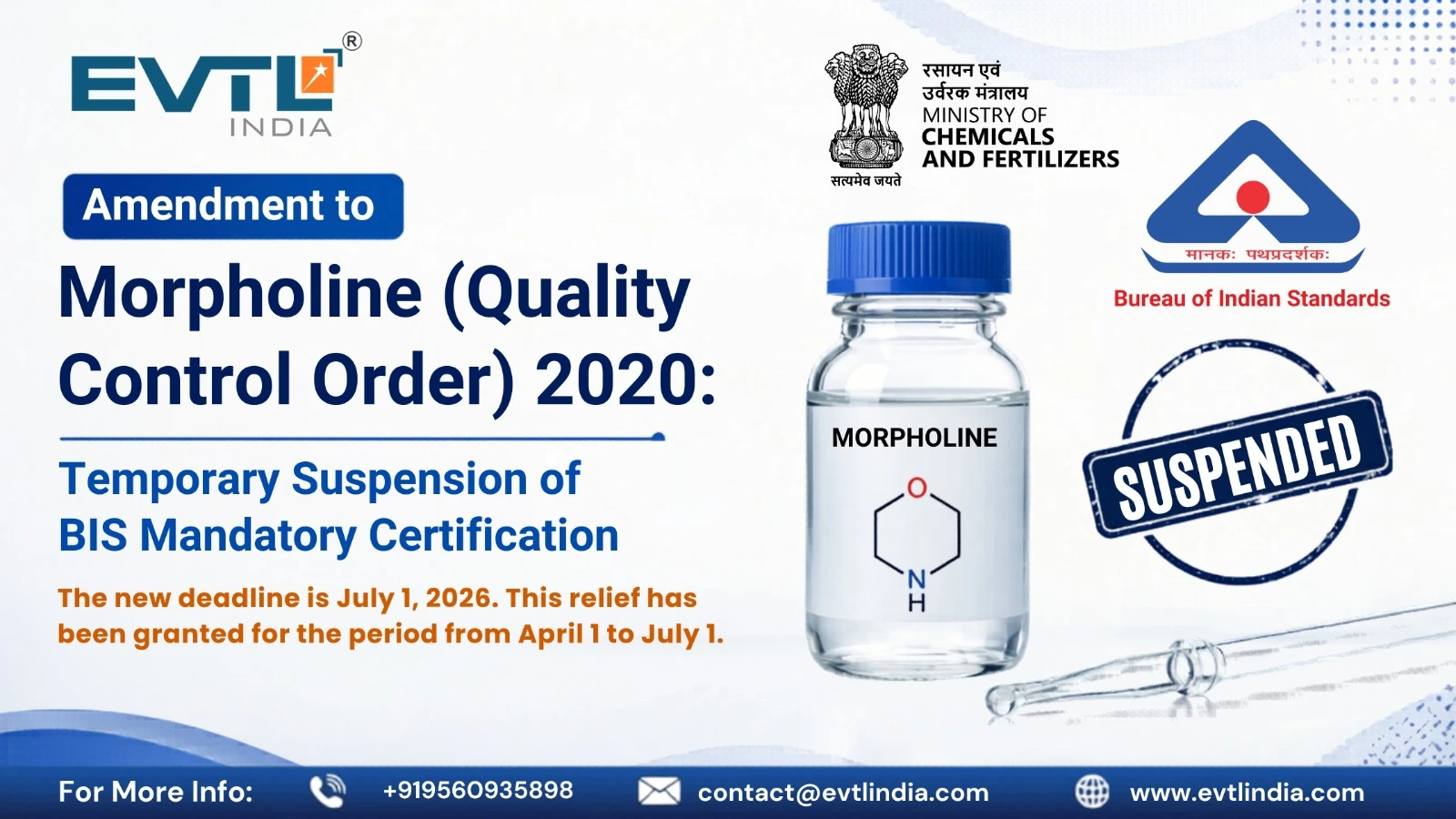
In a significant regulatory development, the Government of India has announced a temporary suspension of mandatory compliance requirements under the Morpholine (Quality Control) Order (QCO), 2020. This amendment, introduced in April 2026, has brought immediate relief to manufacturers, importers, and industries dependent on morpholine, a widely used industrial chemical.
Background of Morpholine QCO 2020
The Morpholine (Quality Control) Order, 2020 was originally issued by the Ministry of Chemicals and Petrochemicals to ensure that morpholine sold in the Indian market meets strict quality and safety standards. Under this order, morpholine was required to conform to the relevant Indian Standard and obtain certification from the Bureau of Indian Standards (BIS). Compliance with BIS norms ensured that only quality-assured products were manufactured, imported, or distributed in India.
Morpholine plays a crucial role in multiple industries, including rubber processing, pharmaceuticals, water treatment, and corrosion control. Given its wide application, maintaining quality standards has always been a priority for regulators.
Key Amendment: Temporary Suspension of BIS Compliance
In April 2026, the government issued an amendment to the QCO, temporarily suspending the mandatory BIS compliance for morpholine. According to official notifications, the requirement to conform to Indian Standards under the QCO will not apply from April 1, 2026, to July 1, 2026.
During this three-month period, manufacturers and importers are not obligated to obtain BIS certification or ensure conformity with prescribed standards for morpholine.
Reason Behind the Suspension
The primary reason for this temporary relaxation is the disruption in global supply chains. The government, in consultation with industry stakeholders and BIS authorities, recognized that strict enforcement of quality standards during this period could lead to supply shortages and operational challenges.
Global logistics issues, fluctuating raw material availability, and geopolitical factors have impacted the supply of key chemicals, including morpholine. To address these concerns, the Ministry of Chemicals and Fertilizers, through the Department of Chemicals and Petrochemicals, decided to ease compliance requirements temporarily.
This move aims to ensure uninterrupted availability of morpholine for industries that rely heavily on it, thereby preventing production slowdowns and economic disruptions.
Impact on Industry
The temporary suspension has several implications for stakeholders:
- Relief for Manufacturers and Importers Businesses involved in the production and import of morpholine can now operate without the immediate burden of BIS certification. This reduces compliance costs and procedural delays in the short term.
- Improved Supply Chain Stability The relaxation allows companies to source morpholine more freely, helping maintain a steady supply in the domestic market and avoiding shortages.
- Operational Flexibility Industries such as pharmaceuticals, rubber, and water treatment can continue operations without facing disruptions due to limited availability of compliant materials.
- Short-Term Nature of Relaxation It is important to note that this suspension is temporary and does not signify a permanent rollback of quality standards. Once the exemption period ends, full compliance with the QCO will be reinstated.
Regulatory Continuity and Future Compliance
Despite the temporary exemption, businesses are advised not to treat this period as a complete deregulation. The government has clearly indicated that all provisions of the Morpholine QCO 2020 will become applicable again after July 1, 2026.
Companies should use this period strategically to:
- Prepare for BIS certification
- Complete product testing and documentation
- Strengthen compliance systems
- Stay updated with further regulatory notifications
Failing to resume compliance after the suspension period could lead to penalties, product restrictions, or disruptions in business operations.
Broader Regulatory Context
The temporary suspension of morpholine QCO is part of a broader trend where the government adjusts regulatory frameworks in response to global economic conditions. Similar relaxations have been observed in other chemical sectors to balance regulatory enforcement with market realities. Such measures highlight the government’s pragmatic approach—ensuring both quality control and supply continuity. While BIS standards remain critical for long-term safety and performance, temporary relaxations help industries navigate short-term challenges effectively.
Conclusion
The temporary suspension of BIS compliance under the Morpholine (Quality Control) Order, 2020 marks an important regulatory update in 2026. By allowing a three-month exemption from April to July, the government has provided much-needed relief to industries facing supply chain disruptions. However, this flexibility comes with responsibility. Businesses must remain proactive and ensure readiness for the reinstatement of mandatory BIS compliance. In the long run, adherence to quality standards will continue to play a crucial role in maintaining product safety, market credibility, and regulatory alignment in India’s chemical sector.