CRS Fee Exemption Under BIS Registration Scheme
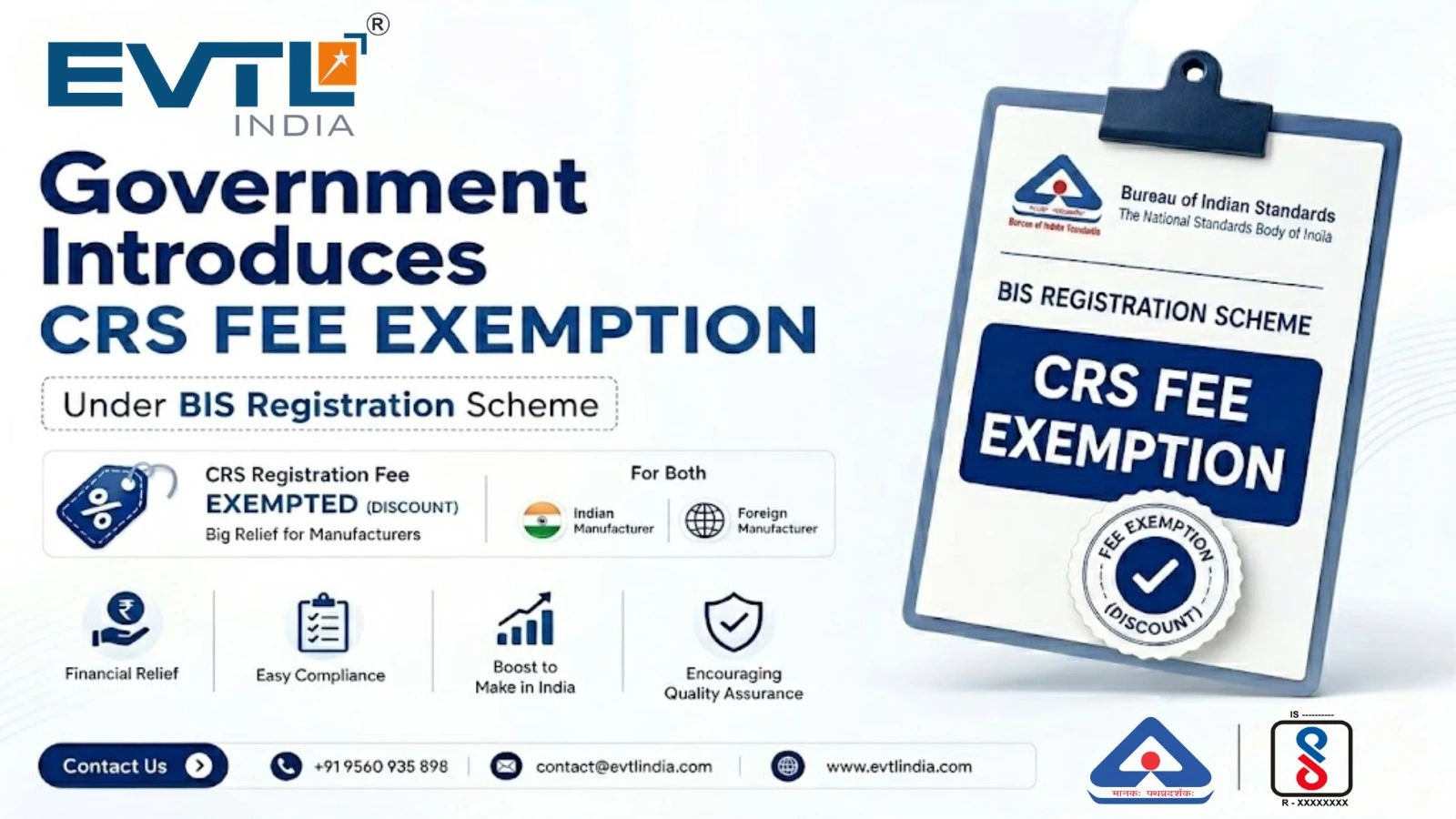
In a significant move to promote ease of doing business and support manufacturers, the Government of India has introduced a fee exemption under the Compulsory Registration Scheme (CRS) operated by the Bureau of Indian Standards (BIS). The decision is expected to reduce compliance costs for businesses seeking BIS registration for electronic and IT products covered under the CRS framework.
The CRS scheme, implemented by BIS under the Ministry of Electronics and Information Technology (MeitY), mandates registration of various electronic products before they can be manufactured, imported, stored, distributed, or sold in India. Until now, applicants were required to pay application fees, processing charges, annual registration fees, inclusion charges, and renewal fees as part of the registration process.
Existing CRS Fee Structure
Under the previous fee structure, applicants were required to pay:
- Application Fee: ₹1,000
- Processing Fee: ₹25,000 (including one test report)
- Annual Registration Fee: ₹2,000 for two years
- Inclusion Charges: ₹15,000
- Renewal Charges: ₹28,000 plus applicable taxes
These charges added to the overall compliance cost, particularly for startups, MSMEs, and manufacturers managing multiple product registrations.
What Does the Fee Exemption Mean?
The newly announced fee exemption aims to provide financial relief to applicants under the CRS scheme. The initiative is expected to:
- Reduce regulatory compliance costs.
- Encourage more manufacturers to obtain BIS registration.
- Support domestic manufacturing under the Make in India initiative.
- Improve ease of compliance for startups and MSMEs.
- Promote faster adoption of quality and safety standards.
Impact on Manufacturers and Importers
The exemption is likely to benefit a wide range of stakeholders, including:
- Domestic manufacturers of electronic products.
- Foreign manufacturers exporting products to India.
- Importers and brand owners requiring BIS CRS registration.
- Startups introducing new electronic products in the Indian market.
Lower compliance costs can help businesses allocate more resources toward product development, quality improvement, and market expansion.
Strengthening India's Product Safety Ecosystem
The CRS scheme plays a crucial role in ensuring that electronic products sold in India comply with prescribed Indian Standards and safety requirements. By reducing the financial burden associated with registration, the government aims to encourage wider participation in the certification framework while maintaining product quality and consumer safety.
Conclusion
The introduction of CRS fee exemption marks a positive development for the electronics manufacturing sector in India. The move is expected to make BIS registration more accessible, reduce compliance expenses, and support the government's broader objective of strengthening India's manufacturing ecosystem. Manufacturers and importers covered under the CRS framework should review the latest notification carefully and assess how the revised fee structure may benefit their registration and compliance plans.