CDSCO Introduces Interim Procedure for CT-16 Applications for BA/BE Export Studies
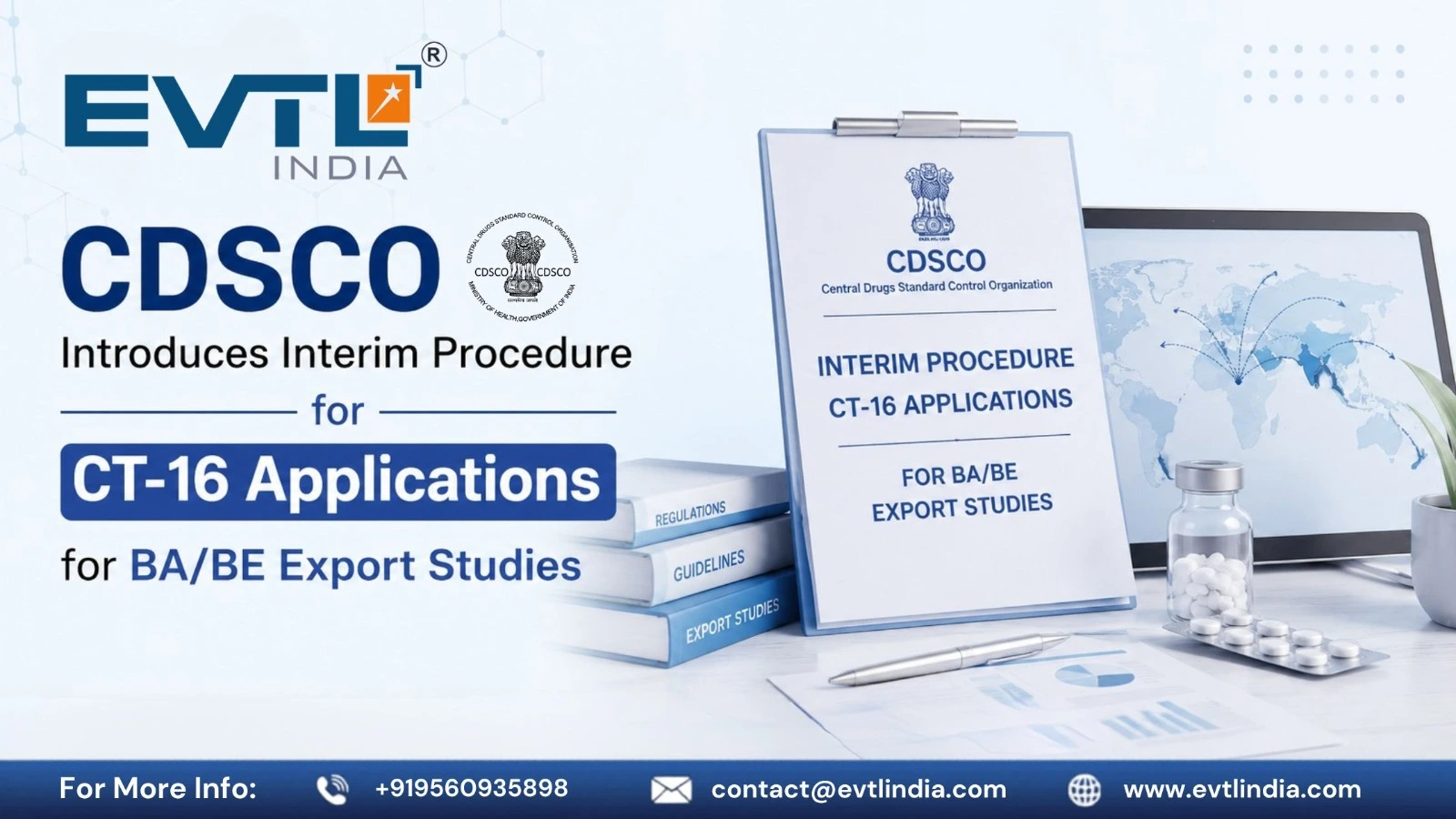
Intro In an important regulatory development for the pharmaceutical and clinical research industry, the Central Drugs Standard Control Organization (CDSCO) has issued a new notice regarding the submission of CT-16 applications for BA/BE export studies. The notification has been released by the BA/BE for Export Division under the Directorate General of Health Services, Ministry of Health & Family Welfare on 22 May 2026.
The latest update addresses operational difficulties faced by applicants due to the lack of system integration between the Sugam Portal and the National Single Window System (NSWS) portal. This issue was creating delays and complications in the filing of Form CT-16 applications for the import of Reference Listed Drugs (RLDs) and Investigational Medicinal Products (IMPs) intended for Bioavailability/Bioequivalence (BA/BE) studies for export purposes.
Why CDSCO Issued This Notice
According to the official notification, several stakeholders had submitted representations regarding technical problems in linking the Prior Intimation (PI) application filed through Form CT-05 on the Sugam Portal with the corresponding CT-16 application submitted through the NSWS portal. Because of this system mismatch, applicants involved in export-related BA/BE studies were facing procedural and operational hurdles.
To resolve these issues and ensure continuity in approvals and imports related to BA/BE studies, CDSCO has now introduced an interim procedural arrangement. This temporary mechanism will remain applicable until further orders are issued by the authority.
What Is the New Interim Procedure?
Under the revised interim arrangement, applicants intending to import RLDs or IMPs for the conduct of BA/BE studies for export purposes can now submit standalone Form CT-16 applications directly through the NSWS portal. This provision has been introduced specifically to overcome the current system linkage problem between the two portals.
This move is expected to provide significant relief to BA/BE centres, Clinical Research Organizations (CROs), pharmaceutical exporters, and other stakeholders who rely on timely regulatory approvals for export studies.
Documents Required Along with CT-16 Application
CDSCO has also specified the list of documents that applicants must submit along with the standalone CT-16 application. These include -
- Covering letter explaining the purpose of import and reference details of the Prior Intimation application
- Copy of acknowledged Prior Intimation (Form CT-05) generated through the Sugam Portal
- Complete details of the proposed RLD or IMP to be imported
- Copy of protocol, synopsis, or reference details wherever applicable
- Proof of fee payment as prescribed under Schedule VI of the NDCT Rules, 2019 through the Bharat-Kosh portal
- Additional supporting documents required by the concerned CDSCO Zonal or Sub-Zonal Office
The authority has clarified that all applications submitted under this interim mechanism must still comply with the provisions of the New Drugs and Clinical Trials (NDCT) Rules, 2019 and other applicable regulatory requirements.
Priority Processing by CDSCO Offices
Another important point mentioned in the notification is that all CDSCO Zonal and Sub-Zonal Offices have been directed to process such CT-16 applications on a priority basis until further orders are issued.
This instruction is likely to help reduce delays in regulatory approvals and support smoother import procedures for export-oriented clinical studies.
Industry Impact
The latest CDSCO clarification is expected to provide immediate operational relief to the pharmaceutical export sector and clinical research industry. Since BA/BE studies play a major role in export approvals for pharmaceutical products, uninterrupted processing of CT-16 applications is highly important for manufacturers and CROs.
By introducing this temporary standalone filing mechanism, CDSCO has demonstrated a practical and industry-supportive approach to resolving portal-related compliance issues while ensuring that regulatory oversight under NDCT Rules continues effectively.