
BIS Introduces 5-Year Licence Validity and Renewal Under Scheme-I
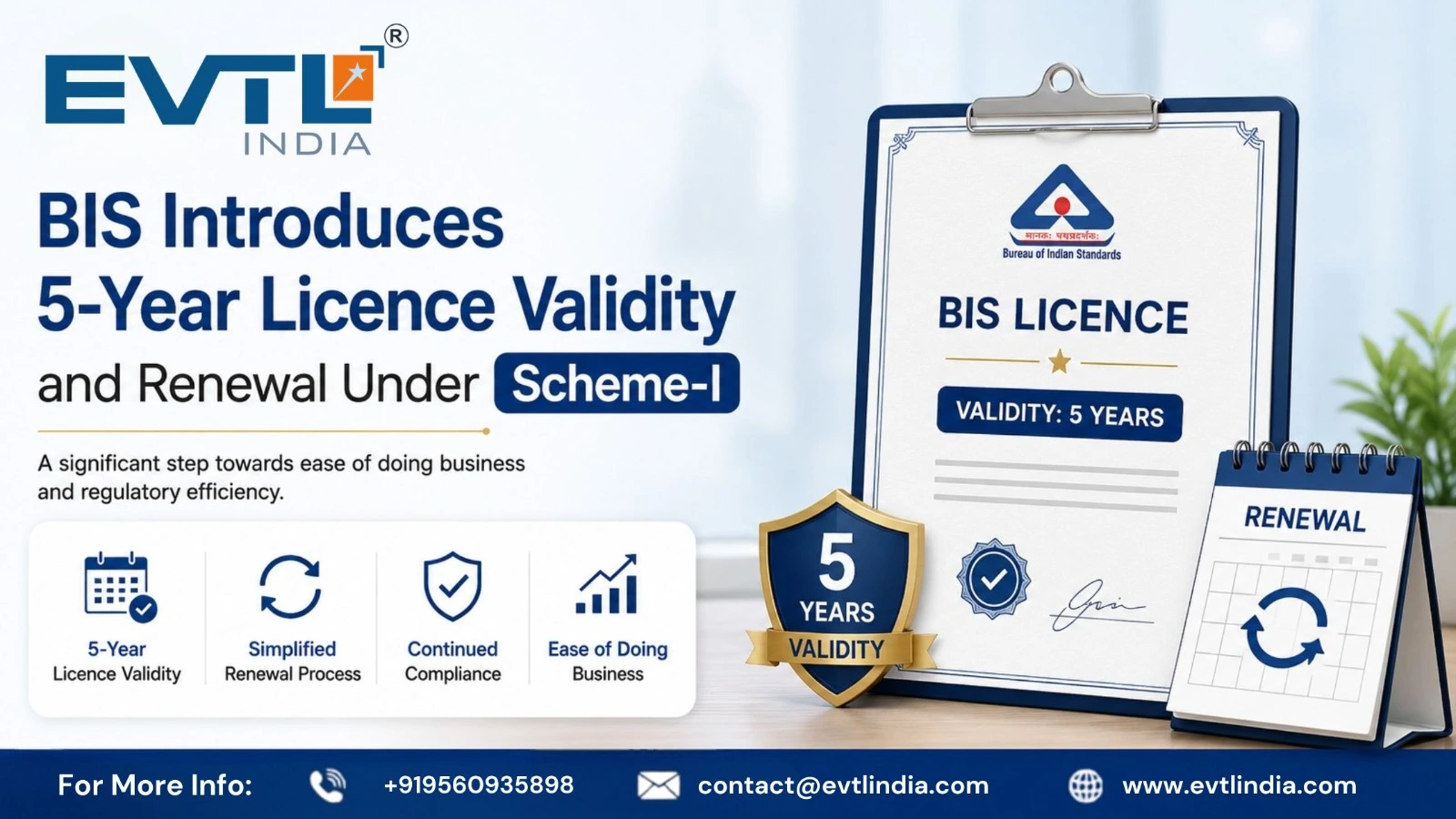
A major change has been introduced in the BIS certification framework that could significantly reduce long-term compliance pressure for manufacturers across India. The Bureau of Indian Standards (BIS) has officially amended the BIS (Conformity Assessment) Regulations, 2018, revising the validity structure of licences issued under Scheme-I.
As per the latest amendment notified on 25 February 2026, BIS licences under Scheme-I will now be granted and renewed for a period of up to 5 years. At first glance, the update may appear to be a simple procedural change. However, for manufacturers managing multiple licences, product categories, audits, and renewal timelines, this is a major operational relief.
What Exactly Has Changed?
The amendment introduces a revised validity framework for licences issued under Scheme-I of BIS certification.
Initial Licence Validity Extended to 5 Years - BIS licences for the use of the Standard Mark will now be granted initially for -
- 5 Years
Earlier, businesses had to manage licence renewals more frequently, resulting in repetitive documentation, administrative workload, and uncertainty regarding continuation approvals. With the revised framework, manufacturers now receive a longer operational window and improved planning stability for their certified products and manufacturing operations.
This change is expected to benefit both domestic and foreign manufacturers operating under BIS certification requirements. However, there is an important compliance aspect that businesses must clearly understand. While the licence validity has been extended to 5 years, annual compliance obligations still continue.
Renewal Validity Also Increased to 5 Years -The revised structure also applies to licence renewals. Once renewed, the BIS licence may remain valid for another:
- 5 Years
This reduces repetitive renewal filings, documentation management, tracking responsibilities, and regulatory pressure for manufacturers handling multiple certified products. For companies managing large product portfolios, the amendment can simplify internal compliance systems and improve long-term operational planning.
But Here’s the Important Detail Most Businesses May Miss
Many manufacturers may assume:
“A 5-year licence means no yearly compliance requirements.”
That assumption is incorrect. The amendment only extends the validity period of the licence. It does not remove ongoing compliance responsibilities. Failure to comply with annual obligations can still lead to suspension or regulatory action by BIS.
Annual Fee Payment Still Remains Mandatory
BIS has clearly specified that annual payments remain compulsory for:
- Grant of licence
- Renewal of licence
- Continuation of operation under the licence
Manufacturers must continue maintaining:
- Annual fee payments
- Production records
- Testing compliance
- Inspection readiness
- Regulatory documentation
Any delay or non-compliance may still affect the validity and continuity of the BIS licence.
Why This Update Matters for Manufacturers
The revised 5-year validity framework offers several practical advantages for businesses operating under BIS certification:
- Reduced Administrative Burden: Manufacturers no longer need to handle frequent renewal procedures and repetitive documentation every few years.
- Better Compliance Planning: Longer licence validity allows businesses to plan production, imports, certifications, and audits more efficiently.
- Improved Ease of Doing Business: The amendment supports India’s broader regulatory simplification initiatives and reduces unnecessary procedural pressure on industries.
- Operational Stability for Manufacturers: Companies with multiple licences and product categories can now manage certifications more strategically with lower renewal frequency.
- Stronger Long-Term Compliance Management:The system balances ease of operation with continued regulatory monitoring through annual compliance obligations.
Conclusion
The introduction of 5-year licence validity and renewal under BIS Scheme-I marks an important shift in India’s compliance ecosystem. The amendment provides long-term operational relief for manufacturers while maintaining continuous regulatory oversight through annual compliance requirements.
Businesses should not interpret the update as a relaxation of compliance responsibilities. Instead, manufacturers must continue ensuring timely annual fee payments, proper documentation, and ongoing adherence to BIS regulations to avoid suspension risks. For manufacturers operating in multiple regulated sectors, this amendment can significantly improve compliance efficiency and long-term planning under the BIS certification framework.